
Things To Do in Abu Dhabi: Going Around the City Slowly
My first day in Abu Dhabi began at 3:30 am. I landed at the Zayed International Airport, completed immigration (I have explained it in my UAE visa guide for Indians), and took a bus to my host’s house. Remi is a Frenchman who works and lives in Abu Dhabi and is active on Couchsurfing, providing space and shelter to travelers. Couchsurfing is a platform where hosts willing to share their homes put up their profiles, and travelers looking for accommodation write to them about themselves and their travel dates.
Couchsurfing benefits both: travelers get a home, and home dwellers get company and also the opportunity to be hosted when they travel.
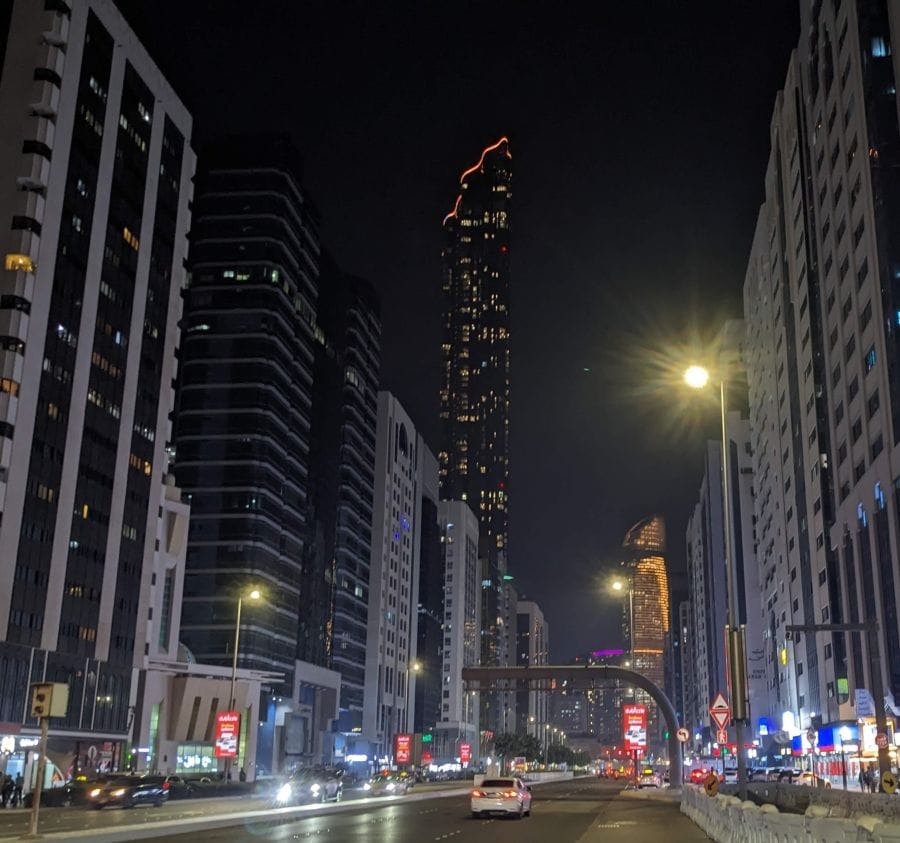
Remi had told me I could show up anytime and that he would leave keys for me at the reception. Even at four am, when I took a bus from the airport to his house, street lights were on, buildings were shining, and many people boarded the bus. On that fifty-minute ride, I dozed off. After the bus, I walked to his home, Google Maps directing me skillfully. A few people were out and about, and some restaurants were open, too.
At Remi’s place, I took the keys from the reception, entered the apartment quietly, and slept on the couch, which my French host had prepared for me in the living room. I had written to Remi because he had a lot of great references from previous travelers. It was my first experience on Couchsurfing, and my stay turned out to be comfortable and safe.
I had lain down at 5:45 am or so and woken up at nine. After a few good hours of rest, I saw Abu Dhabi in full glory.
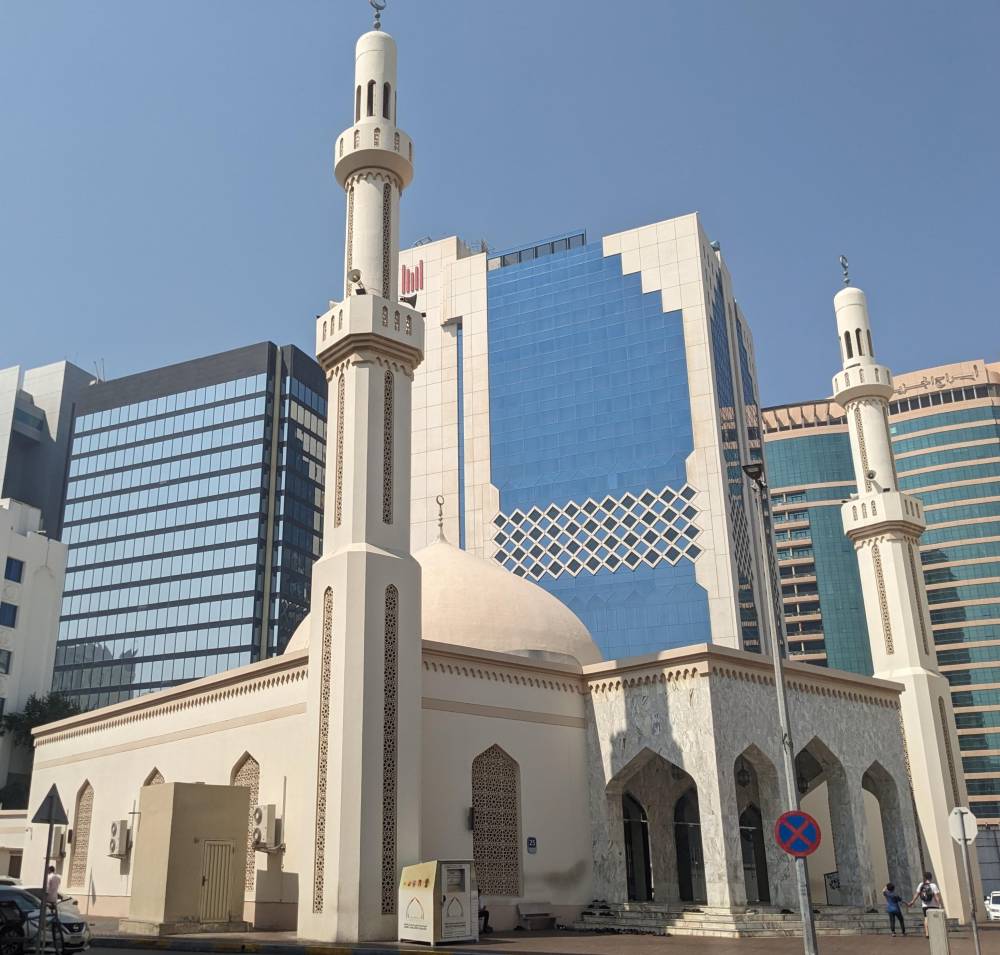
Glass buildings glinted everywhere, Ferraris were parked on the roadside, and beautiful one-story beige mosques fit into the whole scene as naturally as an alphabet on a page. Pristine shining buses ran alongside bikes, cars, and vans. Many Indians roamed around.
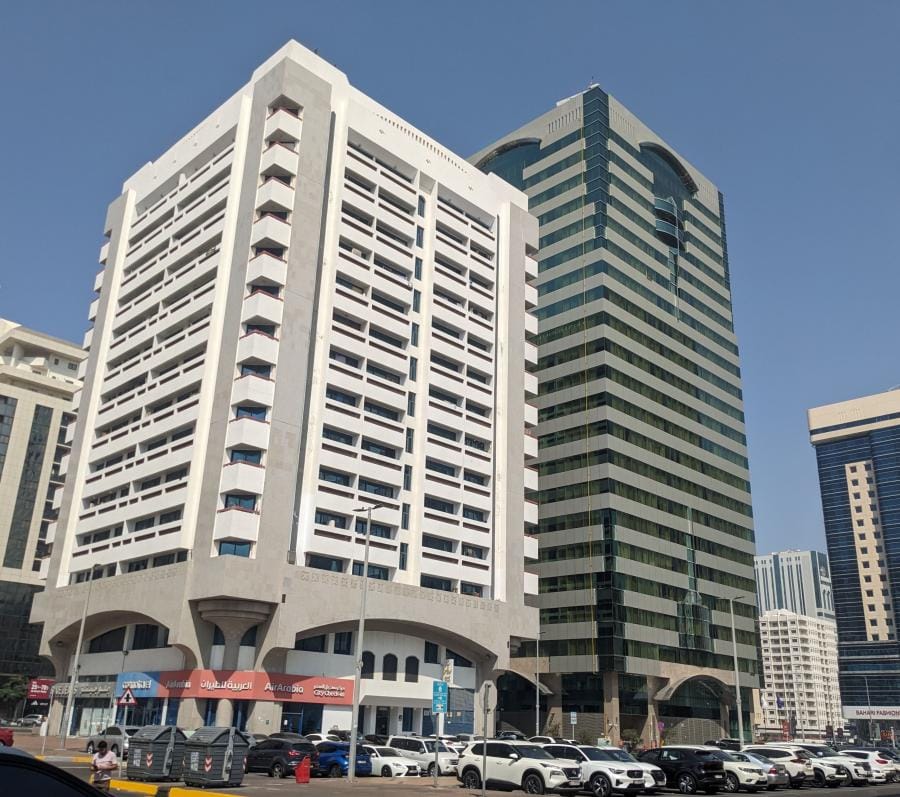
At 11:30 am, I was turning around in the streets next to my place, looking for breakfast and coffee. The sun glowered down on me.
As I stood waiting at a zebra crossing for a car to go by, the bright vehicle stopped for me. I bowed my head and hurried across. Later, I would walk down the zebra crossings, the cars waiting for the pedestrians to pass, as if I had been doing it for years. At the traffic signals, we waited for the walk signal to turn green. People pressed a button so the signal would know that pedestrians were waiting to cross.
I remembered my days on the island of Chiloé in Chile, where cars stopped for pedestrians at any place on the road to let them pass. There, too, the pedestrian was the king, as my college friend living in Dubai put it. (After I spent two days in Abu Dhabi, my friend picked me up and brought me to his house in Dubai.)
I went inside a small bakery with two tables. They had grilled fish with vegetables, some meats I couldn’t understand, fried fish, and many other steel containers full of food. I was in the mood for a sandwich, and the tables looked crammed and occupied. I walked out. My stomach grumbled.
Soon, I was inside a small cool shawarma place where they had a vegetarian sandwich. I ordered one and an orange juice. Meanwhile, a man approached the owner, asking for the change for fifty dirhams in Hindi. I was surprised. The owner, who had been taking my order, nodded and answered him in Hindi. Later, my host would tell me that about 4.5 million Indians live in the UAE. They have resident visas, and they work.
At the shawarma place, too, they had two tables only; I plonked down onto the empty one. The male cooks, who looked Indian and Pakistani, peeked at me from the half-open kitchen door. The vegetable sandwich was poor, with a few slices of tomatoes, cucumber, and cheese, but the juice was fresh.
My UAE adventure was on.
During the day, I would hear not only Hindi but other Indian languages too, especially South Indian tongues. Scorched under the harsh sun, I decided to take up the host’s recommendation and head to the Louvre museum, where, by chance, the works of Picasso were being displayed temporarily.
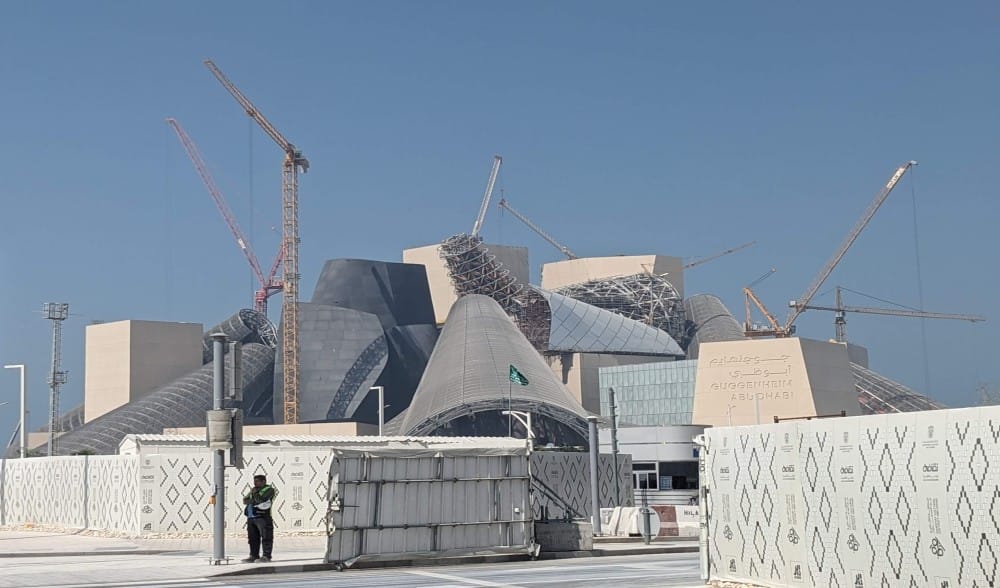
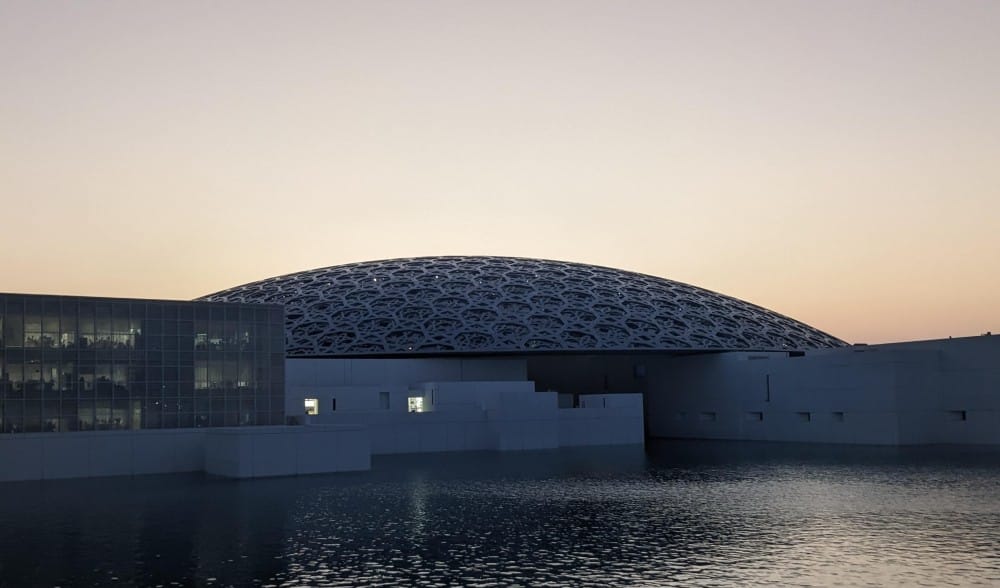
To arrive at the Louvre, I took the bus and got dropped off across the museum. For Abu Dhabi, you need a Halafat card, which I had taken at the airport. And I recommend you take the card at the airport. An attendant will provide you with a card for free, loading it with as much credit as you like. (Look for the card counter before you exit the airport. It is close to the exit from where you walk straight to the waiting area for the bus.)
Later, I would have difficulty recharging the card. The machines at the bus stops in the city were only accepting cash, which I didn’t have. Despite having a slot for a card, it didn’t give an option to recharge with it. So please put at least twenty or thirty dirhams in your card, even if the attendant advises only five or ten. A ride cost me about 2.5 dirhams, about 4.5 from the airport to the city center, and soon I had zero balance.
The entrance ticket to the Louvre cost seventy dirhams. There was no option for audio tours. The museum didn’t impose a dress code (unlike the Presidential Palace or the mosques I would visit later. Kind of obvious, I know.).
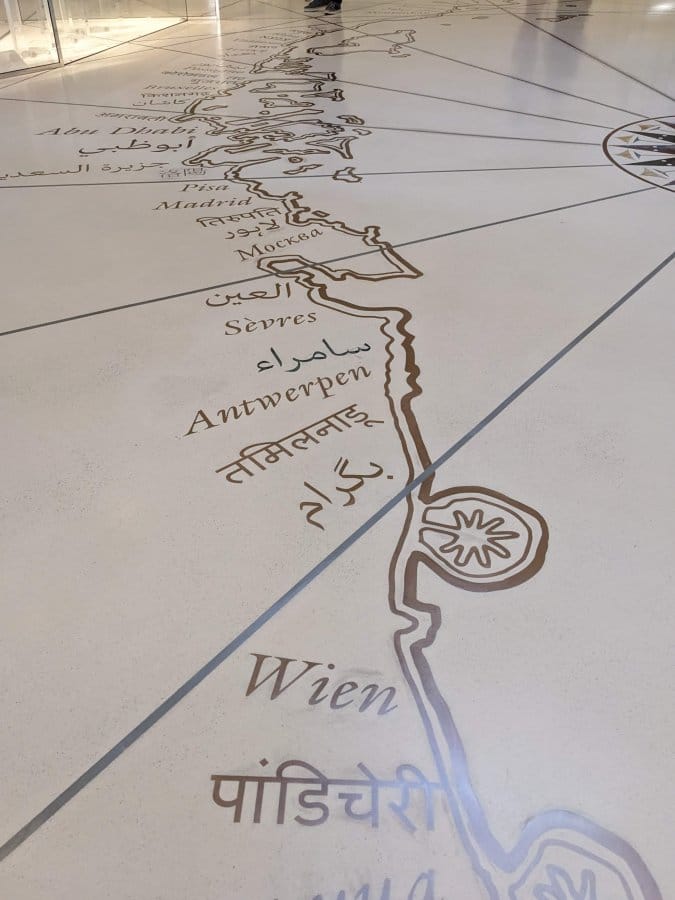
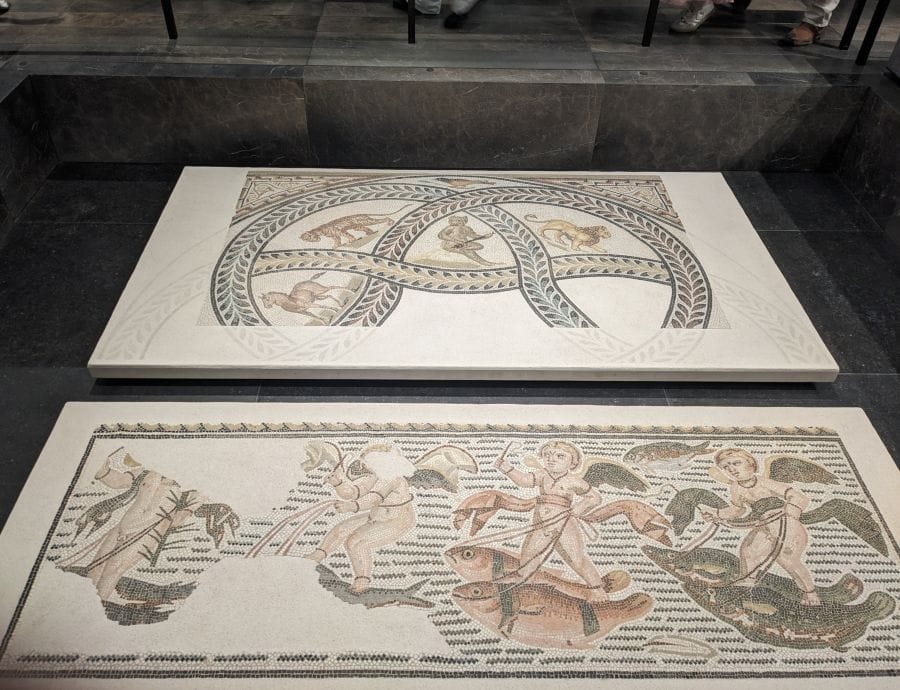
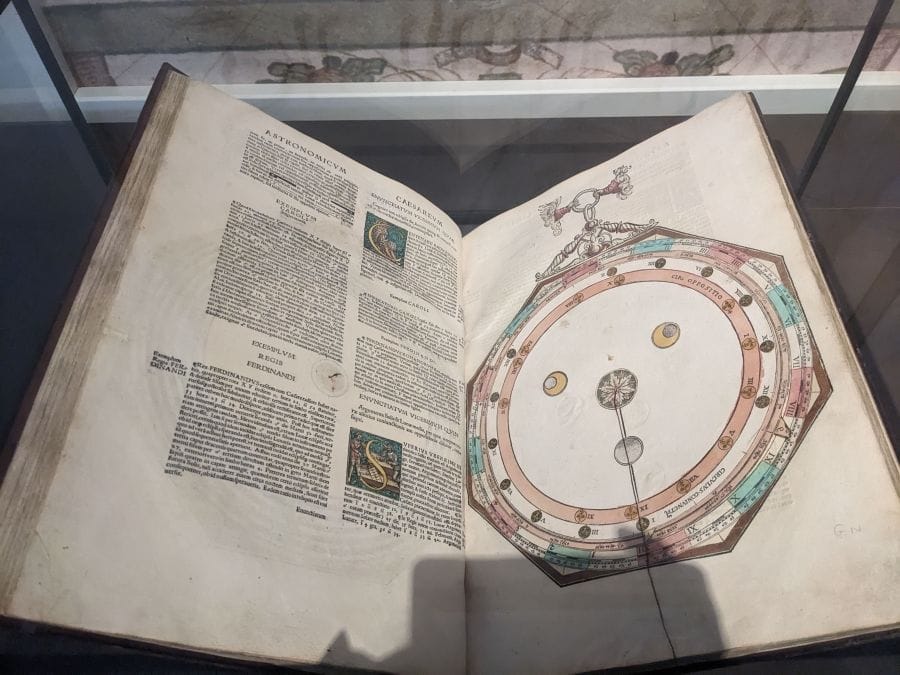
Right at the beginning of my travels, I was energetic and excited. I think the beginning is the best time to visit a place as demanding as the Louvre Museum. It housed a plethora of artifacts from hundreds of eras and around the world. There were antiques from Japan, China, Mexico, India, Malaysia, Indonesia, Qatar, Turkey, Afghanistan, Iran, Italy, and so on. I went along gallery by gallery, which were all spread on the first floor, observing everything slowly. The Louvre had sculptures, paintings, clothes, daggers, coins, busts, cups, lamps, jewelry, textiles, etc. Whenever I wanted to observe a piece or rest, I would sit on one of the ubiquitous benches inside the Louvre.
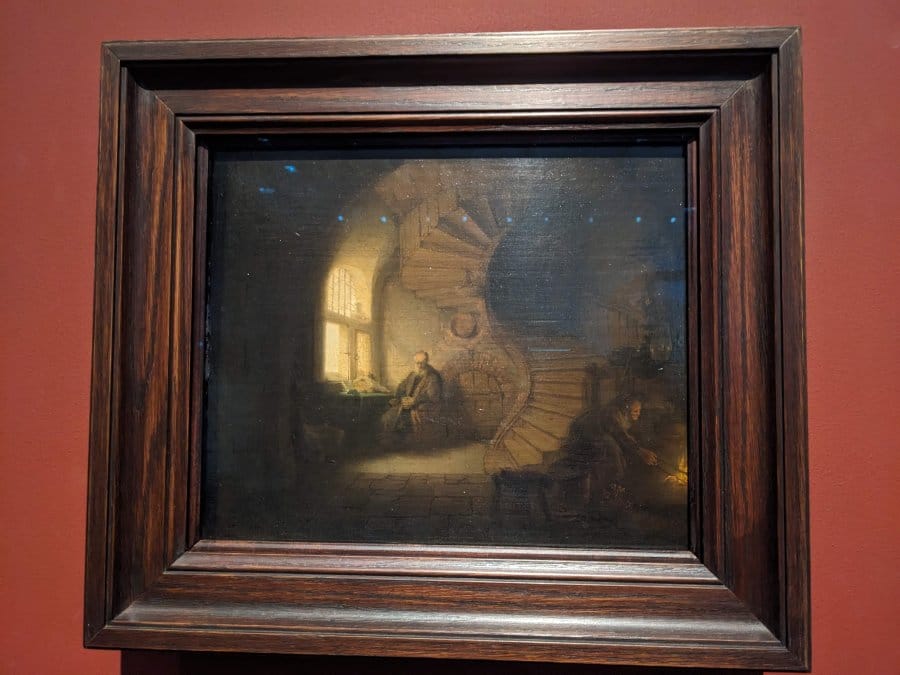
Out of everything, Rembrandt’s painting, The Thinking Philosopher, brought me the most joy. It was beautiful, the sunlight falling through the arched window on the philosopher and the room, while a housemaid or family member tended to the fire in a corner. The staircase curling upwards was almost dark but gave a hint of life beyond the present scene. The play and balance of light, shadow, and darkness was stunning, and that painting held my eyes for a while.
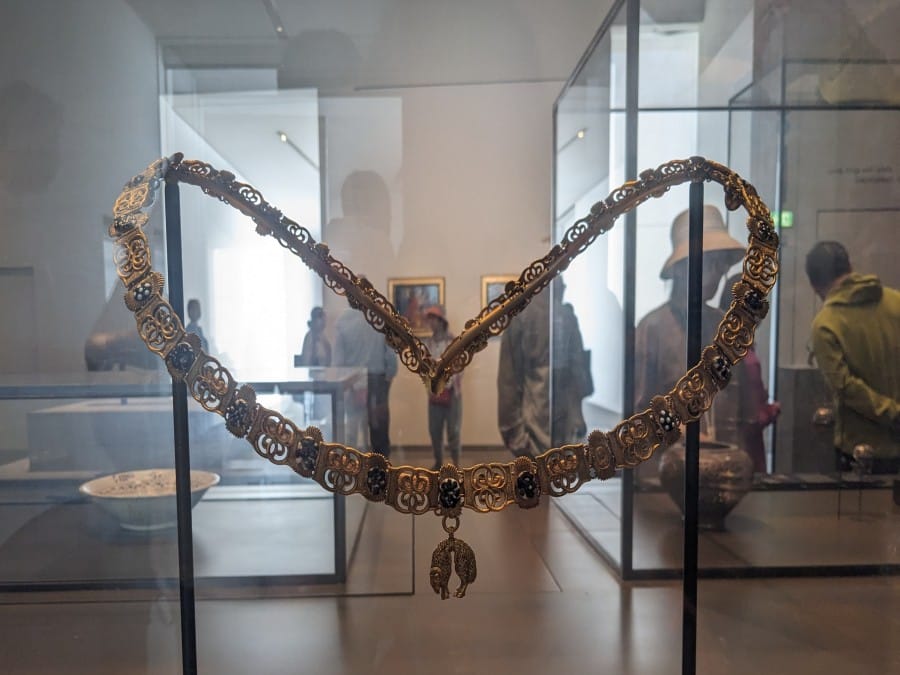
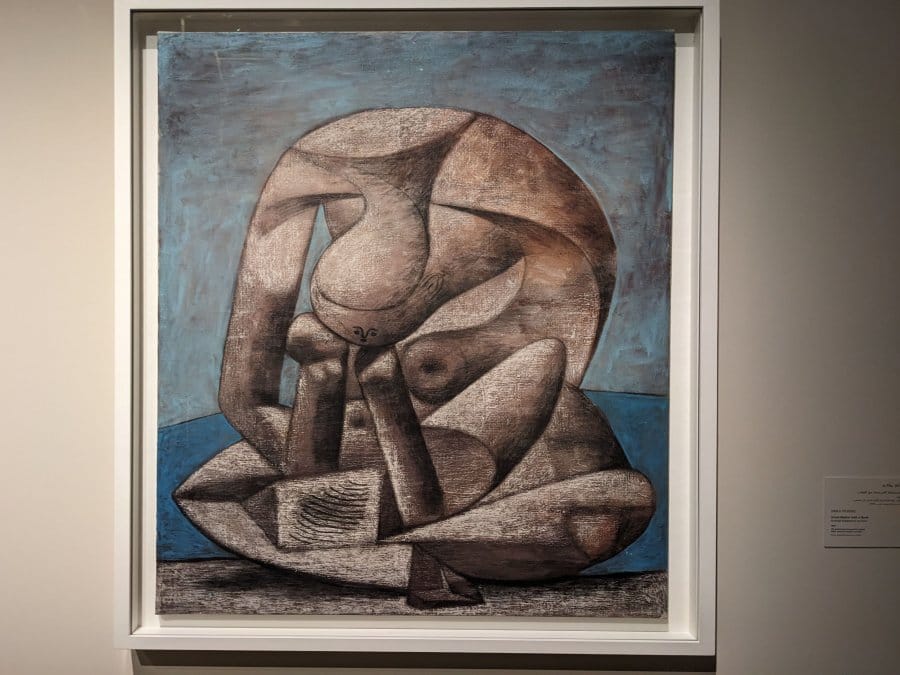
Otherwise, the Louvre was like any other museum. Pristine white, shining marble floors, and the throng of myriad nationalities and origins softly moving along, a man enchanted by a painting, a woman by a lamp, and a child with a Japanese mural telling her mother, Japanese, Japanese.
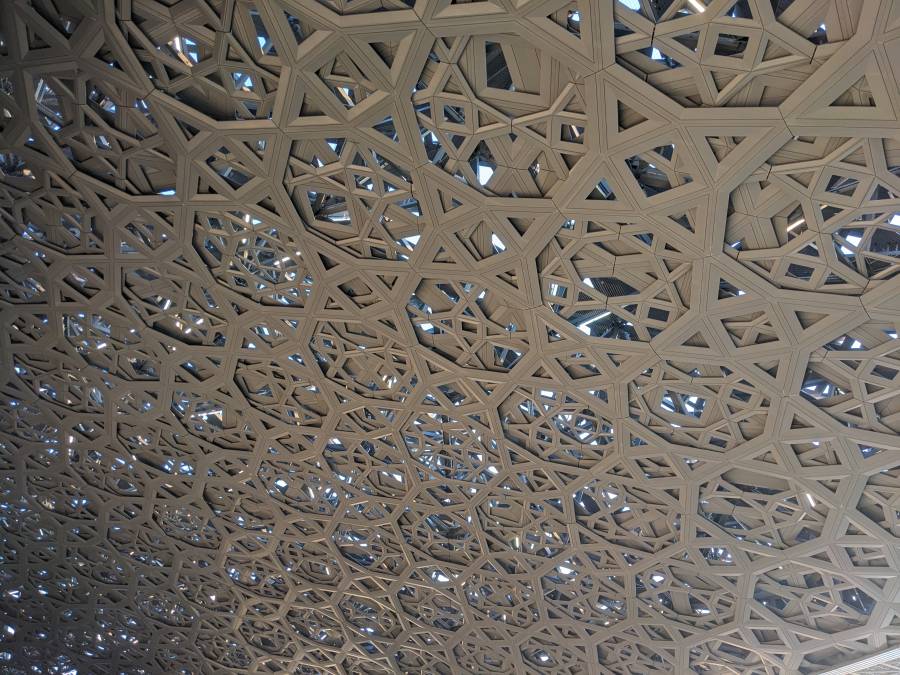
The Abu Dhabi Louvre is shaped like a dome with multiple layers of interconnected iron hexagons forming the sphere. I have not been able to fathom the theme, though. Maybe they represent a sort of geared structure? Not sure.
Here is a photo for you to wonder.
Rembrandt is also a favorite because he is a favorite of Van Gogh.
The museum had toilets, benches to sit, and our bags were taken at the entrance. You can’t carry eatables or water inside. When I joked with the employee that they were asking me to deposit my bag, he mumbled. “It’s just my job, the government has these rules, I am only an employee, I also don’t want to work and want to be at home, but I have to be here, this is a government place, they want it to be secure…” I was stunned. Such a little joke and so much backlash! Perhaps he didn’t understand my comment due to language constraints, or he was an overworked local who was also fasting. I had, fortunately, landed in the UAE during the month of Ramadan. Just my luck!
After that conversation, I decided to be careful. The UAE was not Europe or South America. Why I say that is because South America has an open, fun, free culture. You can dance and sing on the streets. You can laugh and joke and pull strangers’ legs, too. London has also felt cold to me. No one smiled at you warmly, except perhaps a boy or two who wanted to flirt, and everyone looked serious and occupied. In the UAE, at least in Abu Dhabi and Dubai, most people had straight faces, straight walk, adult demeanors. I am sure they had a lot of fun, but I didn’t see them joking around on the streets. Or, maybe, the country was also like everywhere else, with some folks being solemn and others candid.
I was at the museum for three and a half hours, after which I decided to go outside, have a coffee, and sit at the promenade, staring at the cerulean Arabian Gulf (also known as Persian Gulf). Yes, the Louvre in Abu Dhabi is right at the shore. The museum was also running a turtle conservation project, and, as per the guard at the project, four big turtles had made the conservatory their home. As I sipped coffee, one flagged his arms around, nibbling on the cabbage leaves thrown to him.
I was surrounded by hundreds of kinds of people with varied skin tones, hair styles, clothes, cameras, glasses, and purses. People were drinking coffee, some were taking pictures, and others were just soaking in. I couldn’t guess who could have been from where, and for the nth time, I felt how little we know of our own planet.
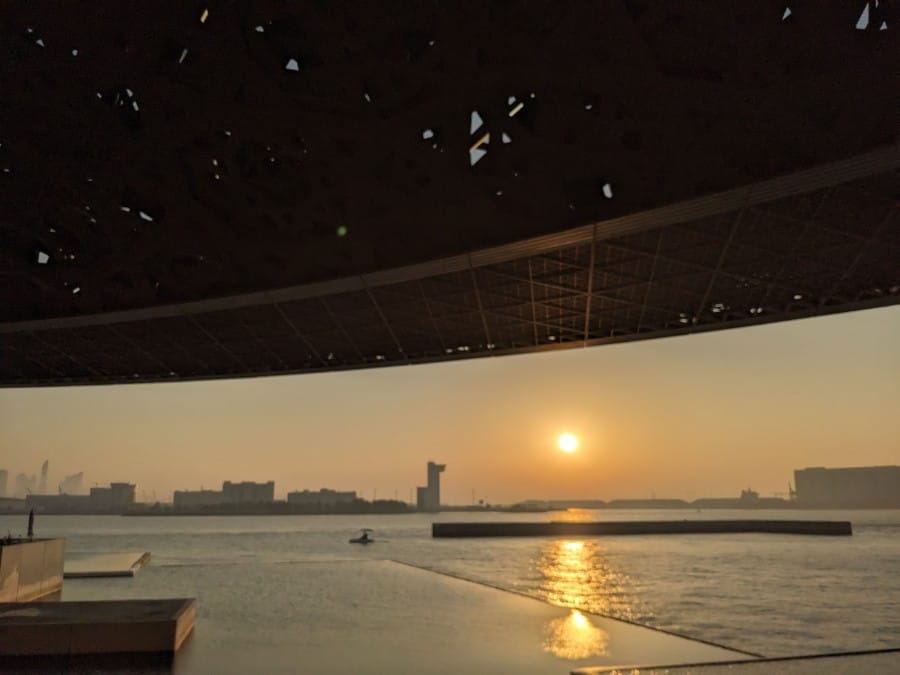
From the Louvre, I took the bus back to the Corniche. My partner, Sagar, had recommended Corniche Street to me. Long seaside walk you might like, he had said. Corniche was exactly how he thought it would be. With the road on one side, I strolled on the Corniche seaside walk, the Arabian Gulf shining on my right. The breeze was cool and sweet, refreshing me. My fatigue from the day had started to fade away. Benches lined the walk, lamps were lit along the fence, and several signs at various places said, “No fishing allowed here.” But people were fishing along the fence, surely at the allowed spots. Fines are hefty in the UAE, and folks follow rules, generally. Locals were running, walking, and cycling. Some were relaxing on the benches.
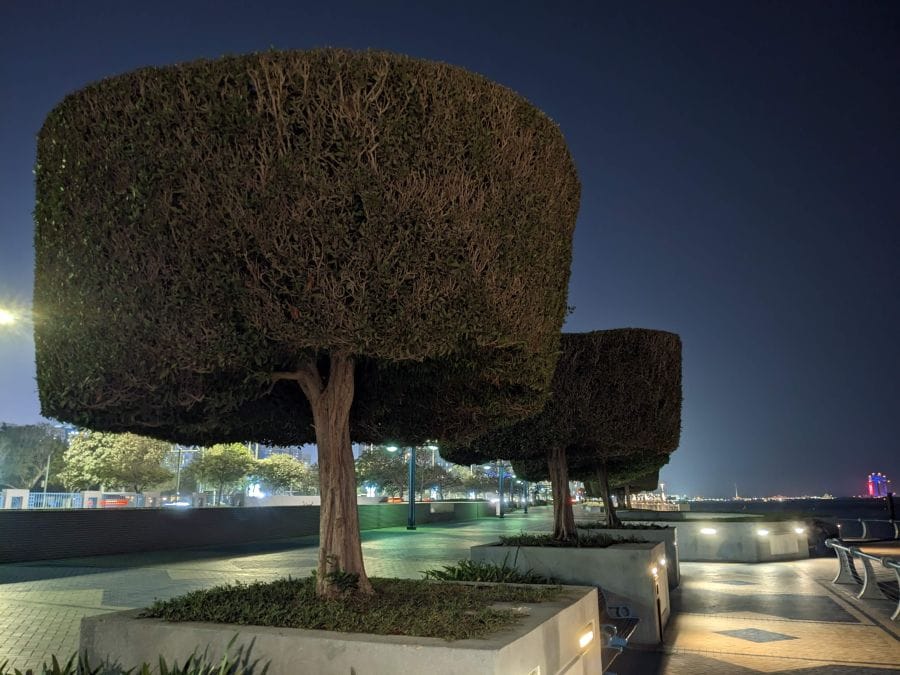
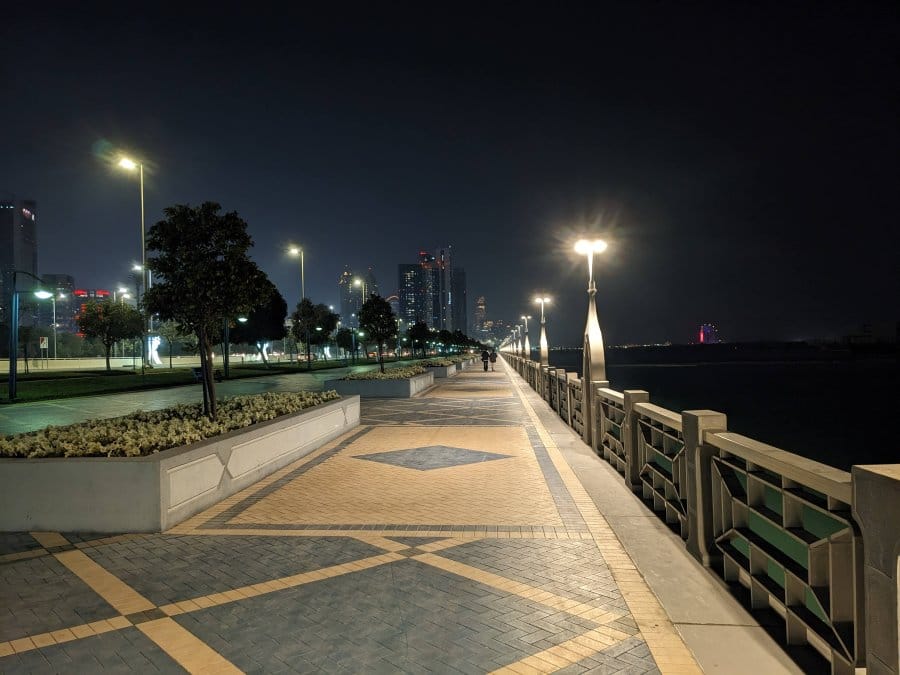
Though cats are abundant in the UAE, the Corniche walk was full of them. I befriended a cat who not only let me pet her but also started meowing when I moved away. I had to caress her for a long time, and when I sat down on a bench, she decided to jump on my lap, where she stayed for a while. Later, I was sneezing (from all the cat hair), but I had no choice.
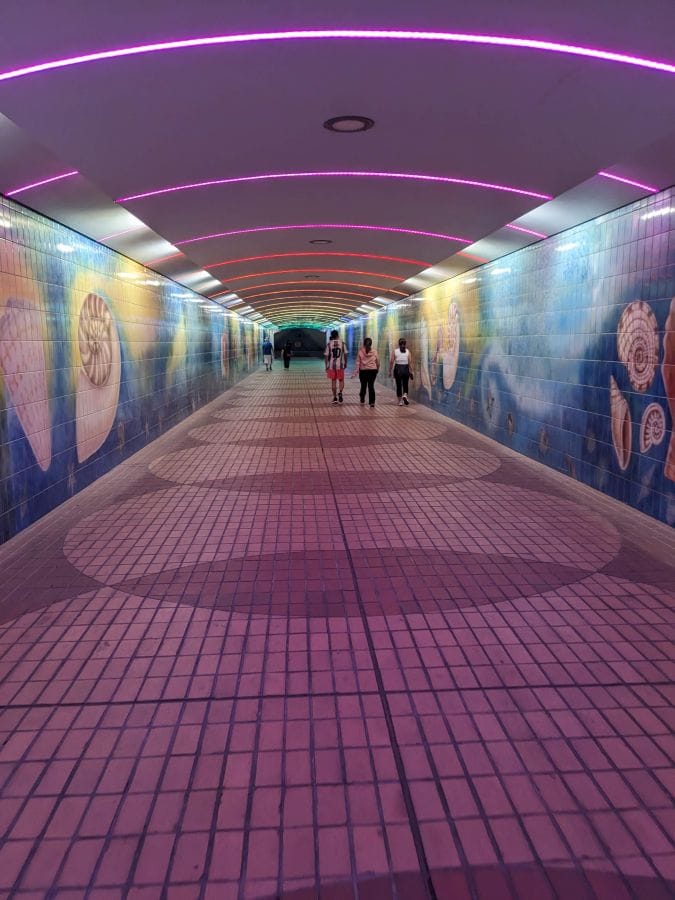
As it was dinner time, and I was craving falafel, an Arabian dish made with chickpeas, I looked for restaurants on Google Maps. I found a reasonable one on the other side of the road. I ambled to the end of the Corniche and crossed the road through a large and fancy underpass, which was also a kingdom of cats. The under bridge had both steps and ramps, allowing cyclists to go freely.
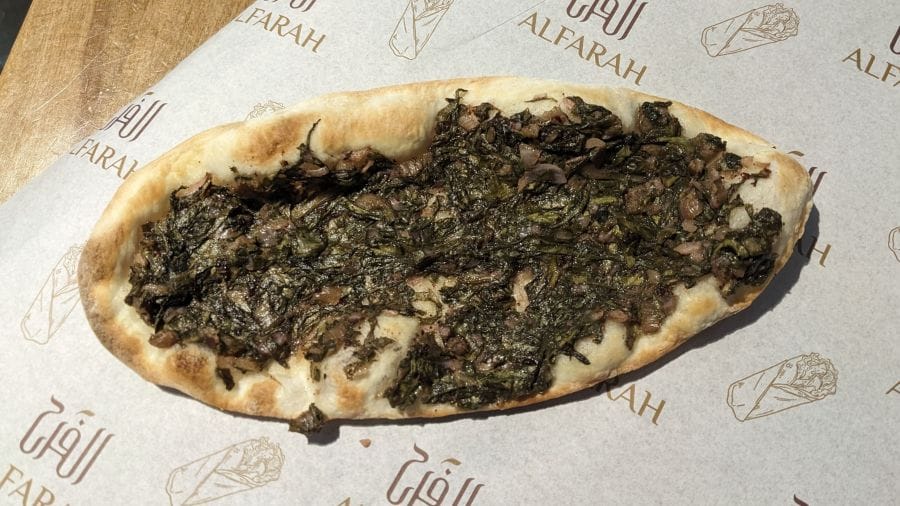
The restaurant, called Alfarah, had a couple of tables occupied. The waiter, a local, was curt, and his only focus was for me to order more. He didn’t try explaining the dishes and didn’t tell me which dishes would be accompanied by bread, etc. I ordered a falafel roll and a flat bread with mushrooms and spinach (trying to remember what it was called). The roll was good, though small, and the bread was okay.
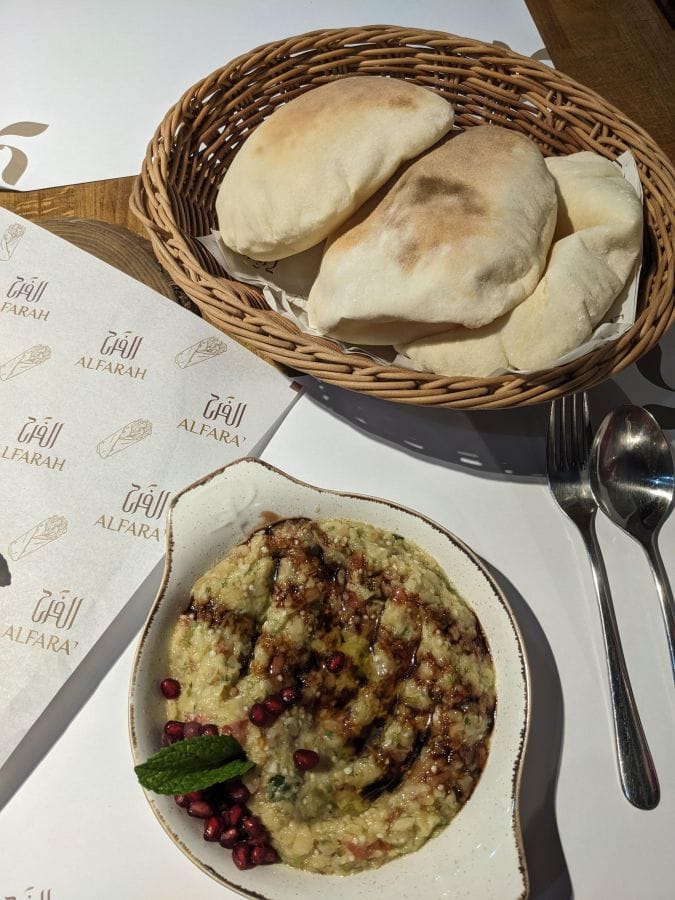
The waiter still wanted me to order more. I thought of having a salad or something. I ordered Baba Ganoush, a grilled eggplant dip, which was too sour (maybe that’s how it is). A few fluffy pita breads were served along with the dip. The portion of baba ganoush was also small, but the pita was delicious.
I wish the waiter were clearer, more patient, and nicer. I wouldn’t recommend Alfarah to travelers when Abu Dhabi has so many good reasonable places.
I got some of the baba ganoush and a pita packed and walked home in the cool breeze, listening to the bustling city. At home, my host, Remi, and I had a nice chat about our lives, things to do in Abu Dhabi, and the local culture. I finished a few chores and hit my couch, excited for the upcoming day.
I couldn’t have wished for a better first day in Abu Dhabi.
Do you like visiting museums? Do you try local cuisine while traveling?
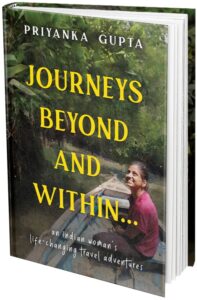
MY FIRST BOOK
Journeys Beyond and Within...
IS HERE!
In my vivid narrative style (that readers love, ahem), I have told my most incredible adventures, including a nine-month solo trip to South America. In the candid book, the scoldings I got from home for not settling down and the fears and obstacles I faced, along with my career experiments, are laid bare. Witty and introspective, the memoir will make you laugh and inspire you to travel, rediscover home, and leap over the boundaries.
Sikkim Express: "Simple, free-flowing, but immensely evocative."
The Telegraph Online: "An introspective as well as an adventurous read."
Grab your copy now!
The memoir is available globally. Search for the title on your country's Amazon.
Or, read a chapter first. Claim your completely free First Chapter here.
Want similar inspiration and ideas in your inbox? Subscribe to my free weekly newsletter, Looking Inwards.