
A Love Letter to Armenia
I want to write about Armenia right now. There is so much to say.
Did I see it enough? What did I feel? What colors do I remember?
I may have many notes from Armenia, but I have to speak from the heart. Sitting in this Sarajevo apartment, while the FIFA World Cup football matches play on the television that I have muted, with the cat having gone to her house, I mean I had to close the door and window on her, I am ready to write about Armenia.
Today was a lot of admin work: money transfer, phone factory reset, emails, and so many more things. I also went to the supermarket, but that was much later. First, I packed up from the first home, walked here, and checked in smoothly. I had thought I would meet a bulky or big guy, or someone my age with a family. Most probably an older, serious kind of person. Instead, I was shown the house by a young guy. Nihad is twenty-five. He is managing his father’s apartment, a father who is no more, sadly. He passed away last year from spine cancer. What a Siberian sniper’s bullet couldn’t do, cancer did. The cancer shifted from the spine to the brain, and after the surgery, when they thought he was getting better, the family lost him within two days.
By looking at the house, you can’t tell the religion of the family. Maybe someone more observant than me can. There are beautiful glass bowls and white lacy curtains, but they don’t tell that the owner is Muslim. Bosnian Muslims form the majority of the country’s population, and I am happy to have found a host amongst them.
The lighting is modern. There is a beautiful red-blue carpet full of flowers underneath the table in the sitting room. It could be Persian or Turkish, or maybe Bosnians do make beautiful carpets as well. I think it is because of Freya Stark’s book that I always think of carpets as Persian. She always talked about walking into nomad camps and beautiful carpets being laid out all about her.
Nihad tells me a lot about Sarajevo. He points me to a cable car station, mentioning that a beer factory is close to it as well. Nihad doesn’t drink, but his brother loves beer. There is a factory outlet near the beer factory, started by the Ottomans but funded by the Hungarians, which sells beer at a good price. I have to try it out. The cable car goes up to the Trebevic mountain. I have been up the mountain, though not by a cable car.
My host also tells me that this district is Ottoman because it was built by the Ottomans. His family is, maybe ten or thirteen generations back, a Turkish family. The great-to-the-power-of-infinity grandfather came from Turkey. One of his other two brothers were sent to Siberia, and maybe one remained in Turkey.
I have been in this house since this morning. Here I have my own bathroom, room, kitchen, dining, foyer, or terrace as Nihad said, where we enter from the main door, vestibule in American terms maybe, and where a beautiful male ginger cat who is six years old doesn’t want to leave me. For now, I closed the door and window, and he is downstairs with his family. It is after two am, after all.
One of the two gas burners works. To check if the electric plate was working, I touched the plate, burning my two fingers, which I then put in the fridge and also ran under the water. The kitchen has beautiful cups, plates, and spoons. A small saucepan with the imprint of pink flowers has taken my heart. Two coffee cups have pink flowers on them, too. And yes, I was offered his mother’s rose sherbet to drink. He served it to me with cold water.
We chatted for hours, and eventually he sat down, too.
I slowed down in Sarajevo to write about Armenia, but resisting Sarajevo and Bosnia and Herzegovina isn’t easy. This country, this city, and its people have been pulling me. I wasn’t so happy in the first two guesthouses. You know how much the place can affect you!
The first hostel in Sarajevo made me go out and explore. It made me eat dinner in restaurants and breakfast in cafes. The second guesthouse depressed me to no limit. It had only a burned pan to cook in, and I ate burned food for two days. I tried to hide from the host, drawing the curtain on the part of the window from where he, sitting on the terrace, could see me. I didn’t want to stay inside, but I was so depressed that I stayed inside. I went out too, but for a few hours each day only. That house pushed me to write reviews of the horrible and good places I had stayed in the last few weeks. I was writing the reviews for two hours, bent over the table, unaware of the city or anything else outside.
Now I am finally at home, in my own space, where there is no one to say anything to me. I can come and go as I like and do what I like at whatever time. If there is a knock on the door, I don’t run to the bathroom to switch off the geyser because I am afraid that the owner is here and he would admonish me. He had specifically asked me to switch off the geyser before showering, but I didn’t. What a strange concept!
I met a lovely couple in the first house, though. I don’t know if I have the photos, but that place was right next to a beautiful mosque, with a long wooden tower, shining brown wood, clean glass windows, and a loud speaker at the top. The windows were painted a deep green, and the mosque, one of the most unique kinds, looked fantastic.
I have been mixing Armenia and Bosnia and Herzegovina. But I have been so charmed by Bosnia, let us just call it Bosnia, that I have to mix these two. (Maybe I should call Bosnia BiH, as the country does.)
There were not many mosques in Armenia. I didn’t see the mosques in Yerevan, the first place in the country where mosques were a thing to see; otherwise, it was always forts and monasteries and cathedrals. Cathedrals were the monasteries. Kings and queens of Armenia ordered the construction of these grand cathedrals within a monastery complex. These monasteries held monks’ quarters, libraries, study areas, kitchens, food halls, centers of science and research, and so on.
They were no ordinary monasteries. Can you imagine such a center today where hundreds of monks, or people, live together and study, learn, write, read, cook, pray, and breathe in harmony? Almost impossible to think.
The royals also had their own figures made over the cathedral walls. Their children holding a replica of the temple or they themselves. A group of young schoolchildren showed me sundials on the stone walls of an Armenian monastery, one of my first in Odzun. I hadn’t noticed the sundials, I told them the truth. The most chirpy one said, ” Yeah, most people don’t.” There was no contempt, judgment, or superiority in her voice. She said it matter-of-factly.
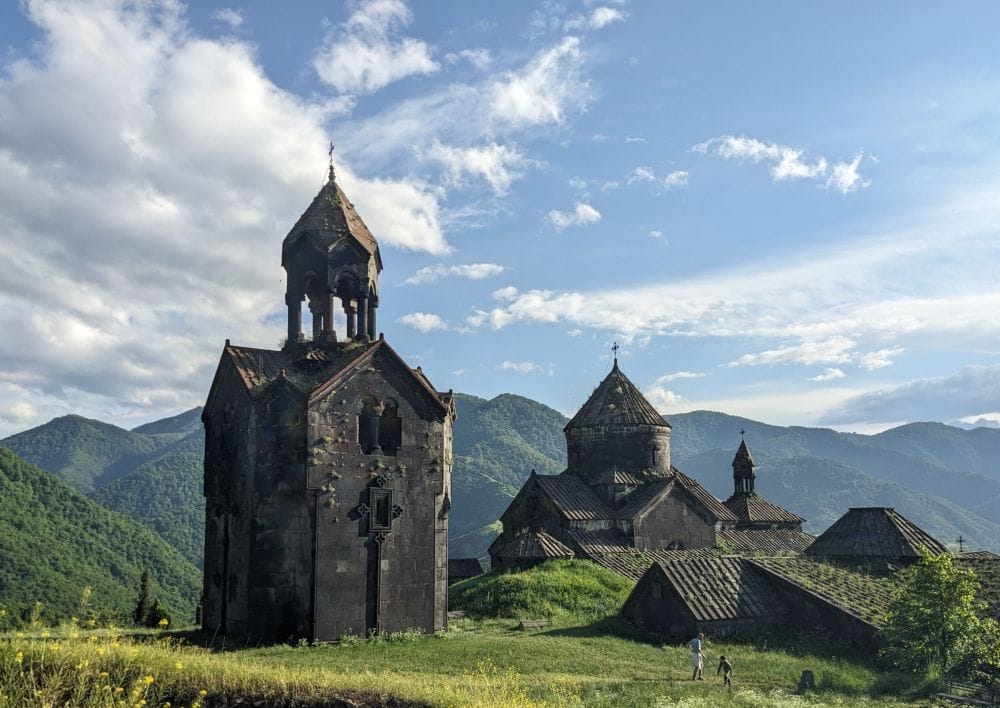
I also saw lions and bulls fighting, an eagle flying with a lamb, and some other figures on these cathedrals. Carved in stone, burning in the sun, and forgotten in the speed is what I think of those sculptures on the walls. They enchanted me, though, and also some locals who saw them on my phone camera.
From a big freshwater lake, about which I have written multiple posts, I went to the mountain town of Yeghegnadzor. Dzor means valley, I read on Google. No one told me. My first Couchsurfing host in Armenia, who also became my self-appointed Armenian guide, Ekaterina, told me how Yeghegnadzor was pronounced. She said it a few times over a voice note, the correct pronunciation, which is ye-heg-nad-zor, and also the incorrect foreign friendly version that she said people would understand and which was ye-gheg-nad-zor.
Ye-heg-nad-zor
Ye-heg-nad-zor
Ye-heg-nad-zor
I repeated it to her multiple times over a voice call. She replied, chuckling as she always does, “Nailed it. Very good.”
My Yeghegnadzor journey was for six days, lasting another day in Artabuynk village. A local family had invited me to their home in Artabuynk. I am thankful to the family. I had met them while hiking to a fortress, and later, I had suggested to spend a day at their house. But I was bored with the slowness of the day. There was nothing for me to do. Not even sitting still soothed me because my stomach started hurting a lot in the evening. So much so that at five pm, I found standing up to talk to my partner over the phone hard. I said to him, “Baby, I am not able to stand. Let me sit down. In fact I am finding it hard to speak at all. I will speak to you later. I want to rest.”
I napped on the sofa for an hour and a half while I was a bit cold, under the blanket given by the mother of the family. I got up and had a herbal tea, prepared for me by the young bride of the family, who said she didn’t tell anyone that I had a stomach ache but that they guessed because of the herbal tea.
Armenians were lovely, kind, and appreciative. Multiple times, the locals, men and women, told me, “You are from India? Oh, India is very good. We are friends with India. India gave us weapons in the Azerbaijan war. They helped us earlier too. India is good.”
I was never tired of listening to their praise for India.
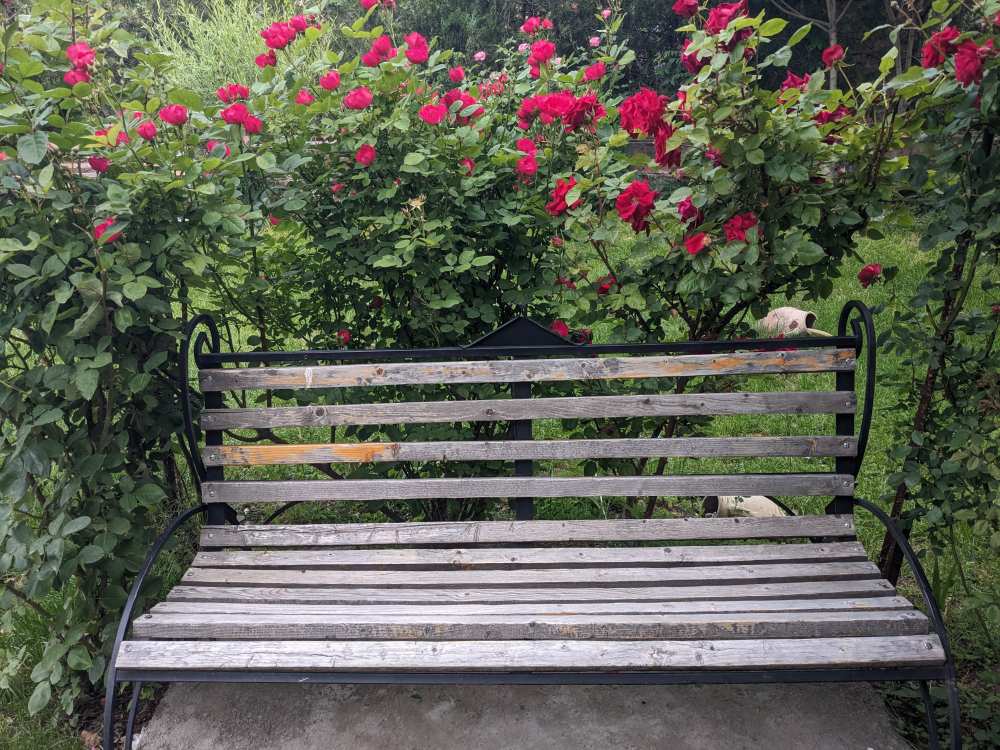
At the time of my visit, Armenia was a weapon of flowers, if anything. Armenian people are peaceful. It is a small country with three million people, fighting enemies on two sides. Weapon of roses, cherries, mulberries, wildflowers, and red poppies. Armenia is nothing but rolling hills wherever you look. On these green undulating carpets, homes, sheep, flowers, fields, fruits, rivers, lakes, all sit restfully. No one is in a hurry except in Yerevan, a part of Armenia whose heartbeat I didn’t have time to catch as I had spent most of my twenty-one days in the mountains and villages, hiking. My visa on arrival to Armenia granted me twenty-one days only.
My first ride, an old toothless driver, had sung the Raj Kapur song to me in a rickety mini truck, just happy for my company, an Indian’s company.
From then on, it was an adventure. Alaverdi to Sevan to Yeghegnadzor to Artabuynk to Sisian to Yerevan. Names I didn’t know became places I wouldn’t forget. Everywhere I went, there were hills or mountains. Yerevan city was also sprawled between the mountains. A river ran through the city, of course.
In Armenia, I didn’t rush, but I didn’t slow down. I had thought I wouldn’t see monasteries and fortresses, but that is all I saw in the country. Ekaterina told me on my first day in her house, “I suggest tourists to go on a hike at the end of which there is something to see. Not just a nature hike. But a monastery or ruins or something.”
She was right. First, I had judged her idea and complained about it internally. But then, on a long day hike from Lake Sevan, I reached a place, crossing ice on the way. I messaged her to ask what was there to see. She said nothing, really. That evening, I agreed with her that tourists should probably go to a place to see something.
What I am trying to say or feel about Armenia, I am not able to say it, sadly.
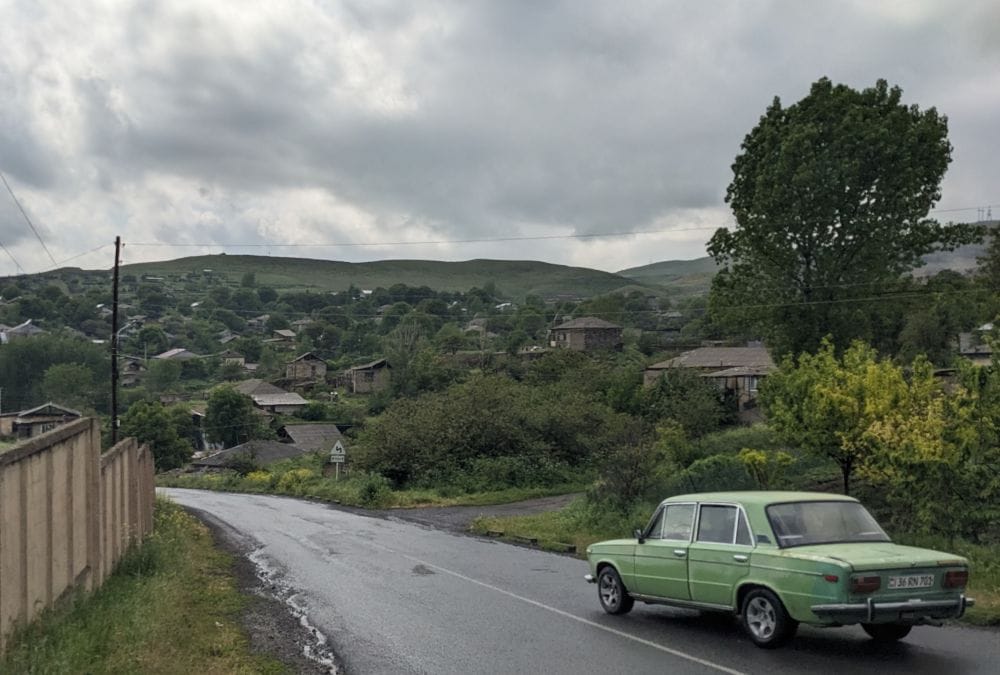
This colorful green yellow orange red sunlit bright golden image with green hills and trees and beautiful tuff stone pink homes and LADA cars speeding along curvy clean roads winding through the country this image that I have and now put in beautiful rosy cheeked children running in rose parks pulling cats’ tails and soldiers painted on the buildings but mothers still laughing in the parks image that I have of Armenia where people were always gently going and coming and always stopping, even the fastest car would stop even if it stopped 100 meters away, this image, I must not forget about the breads, the round buns which were like pav, this image I hold close to my heart.
Armenia, a country where you don’t ask for a ride but you are offered and insisted upon one, where shepherds give you weed stalks to chew upon as you return from your long hike, and where children come and sit by you uninvited and hold your hand, this country will always be special to me.
And when you reach those fortresses and monasteries made in places most unreachable and remote, where you climbed for hours, sometimes slipping on the debris stones rocks pebbles dry earth, and sometimes singing along on the grassy path, you hear the quietness of those places. Mostly I was the only one in the sacred places of the Armenians, the only one to admire the memories of the past, the only one to drink the chilly water from the spring, and the only one to notice the green chameleons scampering into the spiky bushes upon my slightest approach.
I was the only one. Perhaps that is why when I look at some of my pictures from Armenia, I can’t believe I was there. There is no proof of me in those frames. Any one could have taken those images. I could have downloaded them from Stock images. They are all unreal. But somehow they are so mine that they can’t be someone else’s.
And how can the places be forgotten if in this 21st century an Indian woman from a small city is writing about them? This ink, key, ray also knows them now….
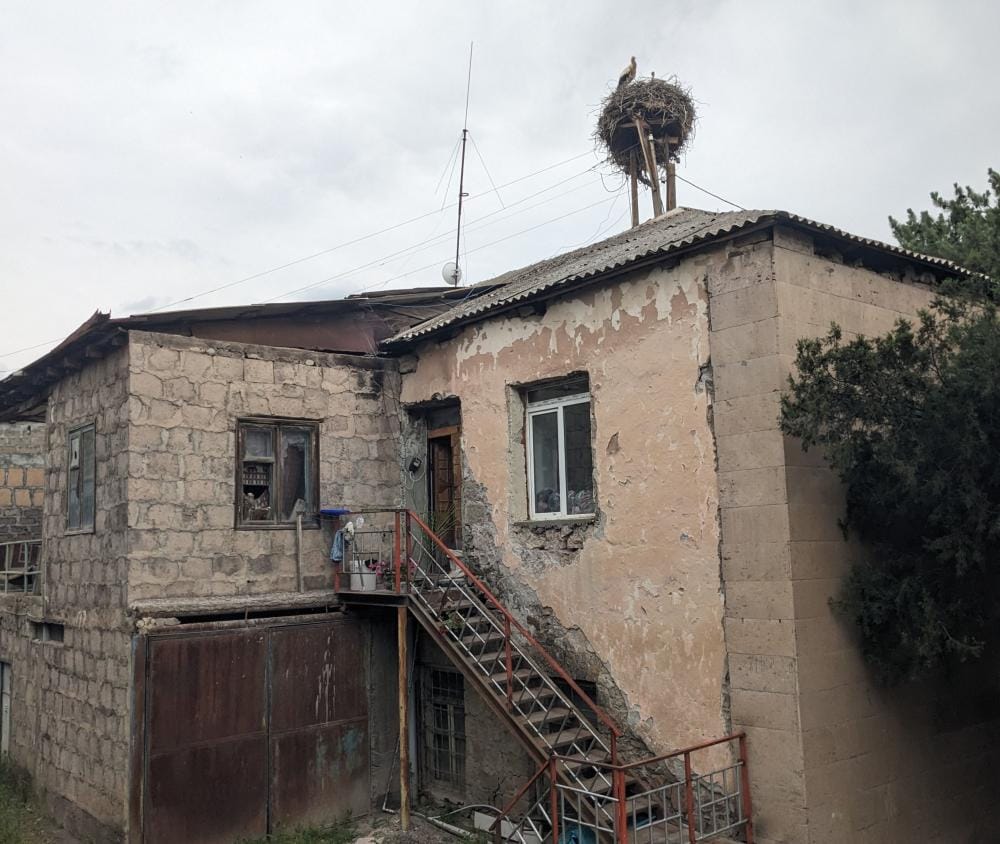
Would you love to visit Armenia, too?
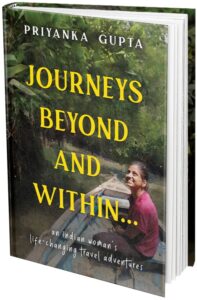
MY FIRST BOOK
Journeys Beyond and Within...
IS HERE!
In my vivid narrative style (that readers love, ahem), I have told my most incredible adventures, including a nine-month solo trip to South America. In the candid book, the scoldings I got from home for not settling down and the fears and obstacles I faced, along with my career experiments, are laid bare. Witty and introspective, the memoir will make you laugh and inspire you to travel, rediscover home, and leap over the boundaries.
Sikkim Express: "Simple, free-flowing, but immensely evocative."
The Telegraph Online: "An introspective as well as an adventurous read."
Grab your copy now!
The memoir is available globally. Search for the title on your country's Amazon.
Or, read a chapter first. Claim your completely free First Chapter here.
Want similar inspiration and ideas in your inbox? Subscribe to my free weekly newsletter, Looking Inwards.
What a beautifully written tribute to Armenia! I really enjoyed how you went beyond the usual travel highlights and captured the country’s history, culture, landscapes, and the warmth of its people. Posts like this remind us that the best travel experiences come from forming genuine connections with a place rather than simply checking off attractions. As someone from Nepal, I could really relate to your appreciation for rich traditions, mountain landscapes, and heartfelt hospitality. Thank you for sharing such a meaningful perspective—it has definitely inspired me to learn more about Armenia and hopefully visit one day.