

My Best Books on How to Write a Book: I Read These While Writing My 1st Travel Memoir
Not all the best books on how to write a book carry this tagline. So many titles, such as Bird by Bird or On Writing, fall directly into the list of best books about writing books. The other books for writers that I have dared to add here are those that have nurtured my growth as a human and a writer for over eight years. These titles aren’t promoted as the best books for writing, but by being so amazing and wholesome, they have slowly guided me along while I wrote my first book, one page, one day, and one breath at a time.
I had written about writers often drinking from the common wellspring of the greatest writing ever written in my favorite books from 2022. I have drunk the books listed here. While reading them, the book had become me, I was her, and everything else ceased to exist.
That afternoon when I learnt to bike and couldn’t believe what I was doing, or when I saw the Himalayas for the first time and was stunned by the pure mountains (more details in my book), and life had grown exponentially larger from what it had been in moments, these books have enlarged my life, too.
A lot of books have changed my life. The Little Prince and Zen and the Art of Motorcycle Maintenance also belong to the same category. I am not including them here. This list of the best books on writing books is limited to those that directly helped me write better, especially travel and nonfiction, my travel memoir to be precise, made me see how to edit a nonfiction book, inspired me to write and keep pursuing art no matter the outcome, allowed me to feel what I was feeling as a lone writer at work might, and some are science books that enhanced my understanding of the human organism. To write about our species, we should understand the physics of our species.
Not a list is perfect, and not a list is suited to everyone. But this is mine. These titles run with my blood. They sit in my stomach. They shape each word my fingers type and my pen inks.
Enjoy my best books for creative writers. I hope that some of these storm you and cradle you as they have me.
Good luck!
My Best Books About Writing Books
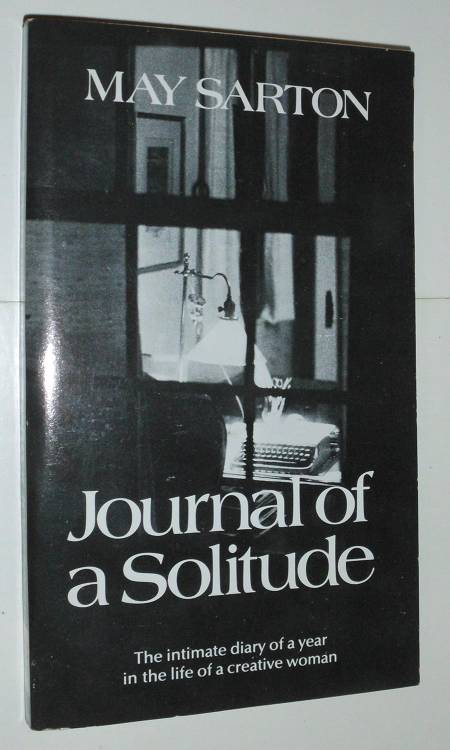
1. Journal of a Solitude by May Sarton (Also part of my Favorite Books from 2022 I linked above)
Journal of a Solitude is the intimate diary of writer and poet May Sarton. These are the journals she confided in while living alone in a mountain home in her sixties.
She wrote about regular chores, writing, saving cat food from wild raccoons, her relationships, and how loneliness is something to be managed when one is by herself. May draws a lucid picture of living alone. Her observations are so crystal as if she is watching her life play from the sidestage. I have so many emotional ups and downs that I used to wonder if anything was wrong with me. May’s confessions on how life feels like chapters in between overspills of our imperfections, how we are at our best and worst, and trying to be happy with what we have but wishing to be able to handle it all better, make me feel a little more normal and less lonely.
As a lone creator, you can get lost in your mind, seeing the wonderfulness of this world and creating your art out of it. This thinking and solitary life gives you unimaginable freedom, but can also make you lonely.
I read the journal while writing my first book, Journeys Beyond and Within…. My partner was with me. As we have been digital nomads for five years, we have been living in between guesthouses. I wrote alone; no team or colleague to work with. Writing is a task of the mind. You create stories out of thin air. Often, you are just sitting and thinking. Being out in the sun or making phone calls isn’t part of your job ever.
The process of writing is isolating. You sit alone inside, away from the elements, and far from people, phone, and modes of communication. You aren’t just browsing the internet (unless you are researching), not mowing the garden, and don’t even think of baking a bread in between a story. No meetings or emails to slow down. Just get to the desk and get on with it.
I often felt lonely.
As a first-time author, retreating into myself for months was hard. The journey was extra isolated because we were living in random homes around strangers. At that time, May’s book came as a friend into my life.
Apart from being vivid, vivacious, and vulnerable, Sarton’s journal is so special because here fluid descriptions of her inner world drew my own inner landscape. I was inspired by how she harnessed her free time to create. And it was great to connect with another writer.
I recommend Journals of a Solitude to all writers. Read it once and read it again. It will empower you to believe in yourself and keep writing. The free-flowing lone writing time carries a sweetness that you’ll be able to appreciate more after reading the journal.
May’s life and writing are poetry on how to make the best of it while not getting overburdened.
“We can do anything, or almost, but how balanced, magnanimous, and modest one has to be to do anything! And also how patient. It is as true in the arts as anywhere else.”
May Sarton
Get Journal of a Solitude on Amazon
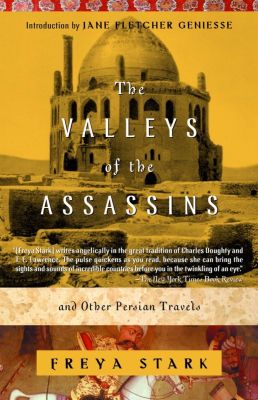
2. The Valleys of the Assassins and Other Persian Travels by Freya Stark (One of the best travel books for writers to read)
At the age of 38, Freya Stark set out on a journey through Luristan, the remote, rough mountain valley part of present-day Iran. In 1931, telephones and fancy modes of transport, and the gadgets and shoes of today didn’t exist. Freya went on the excursions on horseback with local male guides and things she carried from England, knowing that the mountain passes she was traveling to were full of dacoits and hostile tribes and, any moment, the weather could turn.
A lone European woman traveling in Persia was so unheard of that many locals assumed she was a man. Every day, she had to negotiate with the tribes, guides, authorities, weather, and other circumstantial limitations, but she always went on, all of her hungry for more.
And she went for fun.
“But as this book is intended for the Public, and is therefore necessarily truthful, I must admit that for my own part I travelled single-mindedly for fun.”
Freya Stark
The Valley of Assassins is great travel and memoir writing. Stark is eloquent, poetic, and lyrical while never failing to empathize with the locals. From Freya’s unrelenting humor, I learned to look at even the hardest and most frustrating situations with disbelief and curiosity.
“The great and almost only comfort about being a woman is that one can always pretend to be more stupid than one is and no one is surprised.”
Freya Stark
Freya Stark is one of the world’s most underrated writers. In her 100-year-long happy life, she published two dozen travel titles. Stark has changed the way I look at my travels and writing. For fiction writers, Freya’s work is significant. She sketches her world skillfully, creates memorable and wholesome characters, and her understanding of life and humans is to be learned from.
I seek simple writing about ordinary lives. The Valley of the Assassins is one of those simple, happy books that are hard to find these days: a must for both readers and writers.
3. The Art of Memoir by Mary Karr (The Star amongst the books on writing nonfiction)
I have been reading this book since I started writing non-fiction. Mary Karr, an American author of multiple bestselling memoirs, has broken down the How-to of writing a memoir chapter-wise in The Art of Memoir. Her practical, detailed, and encouraging instructions were a Memoir Writing 101 for me. A must-read for nonfiction writers.

Buy The Art of Memoir on Amazon
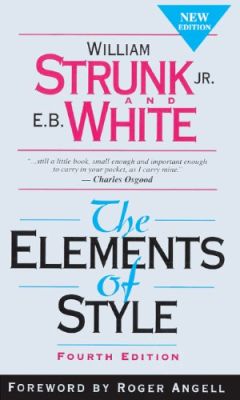
4. The Elements of Style by William Strunk, Junior and E.B. White (Also part of my favorite non-fiction books from 2020)
Though the authors write in the introduction that this style guide only covers a small portion of the English language, the rules would be enough nineteen times out of twenty. All I know about grammar, composition, sentence, and paragraph formation, I’ve learned from The Elements of Style. The most basic and ubiquitous rules of writing in English are laid down in this grammar guide.
All writers need The Elements of Style. It is Grammar 101 for me.
Buy The Elements of Style on Amazon
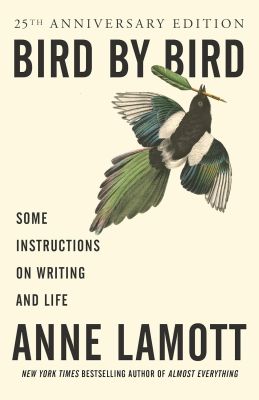
5. Bird by Bird by Anne Lamott (One of the best books for creative writers)
“One of the gifts of being a writer is that it gives you an excuse to do things, to go places and explore. Another is that writing motivates you to look closely at life, at life as it lurches by and tramps around.”
Anne Lamott
I stumbled upon Bird by Bird years ago when I had just started writing sincerely (every list on best books for creative writing vouched for it), and immediately, this seminal book became my friend and companion on long, hard writing days. I’d read it slowly, page by page, highlighting so much that I stopped highlighting.
Lamott asks writers to take writing word by word, as her father had once asked her brother to take an essay on a book of birds, bird by bird. The book has practical step-by-step and philosophical instructions on writing and life and asks the writers to be patient. With Bird by Bird on my side, as a writer I feel what I felt while walking as a little girl, holding my father’s index finger. It keeps things simple, asking the writers to write, repeating that that is the most important thing for a writer to do. Rest will be taken care of.
Bird by Bird is for all writers: old, new, fiction, nonfiction, etc; you can say it’s the tomato of the writing world. Lamott also shares her beautiful ideas on working hard, believing in ourselves, writing honestly about how others made us feel, living well, and enjoying life.
Read Bird by Bird to become a better writer and a better human. This is Writing 101 for me.
6. Telling True Stories, A Non-fiction Writer’s Guide From the Nieman Foundation at Harvard University by Mark Kramer and Wendy Call
The world’s 51 best narrative nonfiction writers give simple, practical, and failproof step-by-step instructions on writing nonfiction, finding topics to write about, covering the different genres, researching, structuring your piece, editing, pacing, developing styles, and publishing. They also help you think about ethical situations in nonfiction writing.
This is definitely Memoir 101 for me, but better: Memoir and Publishing 101.
Telling True Stories has chapters on specific genres of nonfiction, such as travel, history, reporting, personal essays, columns, and investigative writing, from the expert writers in each genre; Mary Karr’s The Art of Memoir doesn’t focus on all genres. Both books are essential. While writing my travel memoir, I often referred to the chapters on travel writing and personal essays in Telling True Stories, and even now, I flip through the book often. It is a great book for bloggers, too.
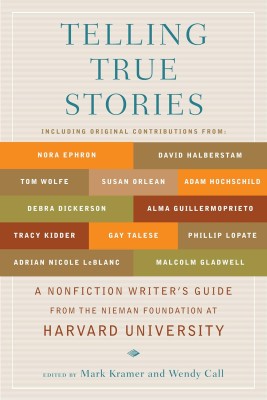
Buy Telling True Stories on Amazon
7. Everything Creative Writing Book by Wendy Burt Thomas (One of the simplest books about how to write)
This is a simple book that holds your hand as you learn to hold the pen. It is for new writers, more than the experienced ones.
Wendy takes you from having you find a place to write to guiding you through publishing. She goes through the basic process of writing, how to keep going, writing regularly, and coming over writer’s block. She bestows the same love upon fiction and nonfiction writers as she does on poets, bloggers, journalists, and short story writers. Then she will tell you how to plan, research, and organize your writing but also how to edit effectively, get feedback, and the writing tools to use.
Everything Creative Writing is a Writing and Publishing 101 with writing samples and resources.
Starting out, I learned a lot of basics from Everything Creative Writing that enabled me to write my first book. I recommend it.

By Everything Creative Writing on Amazon
8. Moments of Being by Virginia Woolf (and also her diaries, and other books)
Of course, Woolf’s books are hard to read. She speaks of a London that doesn’t exist anymore. No longer do men and women live like that and talk like that. Those English courtesies are gone. She writes long sentences.
Yet, her writing is timeless because it speaks the inner truth of a human, which remains the same. Virginia’s stories, essays, articles, and diaries are x-rays of the world. I read Woolf to see under our skin. I read her to understand better. I read Woolf because if you want to write well, you need to see how others do it. She is one of the best writers, and I want to learn from the best.
I was also heavily inspired by A Room of One’s Own.
All writers should read Moments of Being: the autobiographical, intimate essays of the author. The trademark of Woolf’s writing, its ability to immediately unmask us, shines brightly in these personal narratives and letters. You also understand how Woolf’s early experiences shaped her and influenced her writing.

Buy Moments of Being on Amazon
9. The Writing Life by Annie Dillard
I own the book but haven’t read it yet. The Writing Life is in all lists of “books on how to write a book,” so I feel it is my responsibility to recommend it. Judge for yourself, I’d say.

Buy The Writing Life on Amazon
10. Three Men in a Boat by Jerome K. Jerome
I laughed out loud while reading this adventure of three men who set out on a boat journey on the English River Thames. Everything that could go wrong goes wrong, and the friends do everything else apart from what should have been done. As their quagmires deepened, I shook with laughter, and tears were running down my face.
I am sharing this book here not only because it’s a fine specimen of writing but also to tell writers that we don’t have to take ourselves so seriously. We can write about just having fun. That’s enough. I think that is what we need right now. Have fun and talk about having fun.
Buy Three Men in a Boat on Amazon
Now I should really introduce the book which has inspired this article in the first place.
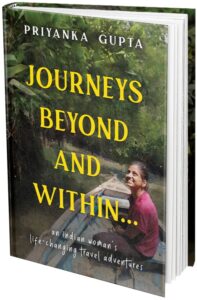
MY FIRST BOOK
Journeys Beyond and Within...
IS HERE!
In my vivid narrative style (that readers love, ahem), I have told my most incredible adventures, including a nine-month solo trip to South America. In the candid book, the scoldings I got from home for not settling down and the fears and obstacles I faced, along with my career experiments, are laid bare. Witty and introspective, the memoir will make you laugh and inspire you to travel, rediscover home, and leap over the boundaries.
Sikkim Express: "Simple, free-flowing, but immensely evocative."
The Telegraph Online: "An introspective as well as an adventurous read."
Grab your copy now!
The memoir is available globally. Search for the title on your country's Amazon.
Or, read a chapter first. Claim your completely free First Chapter here.
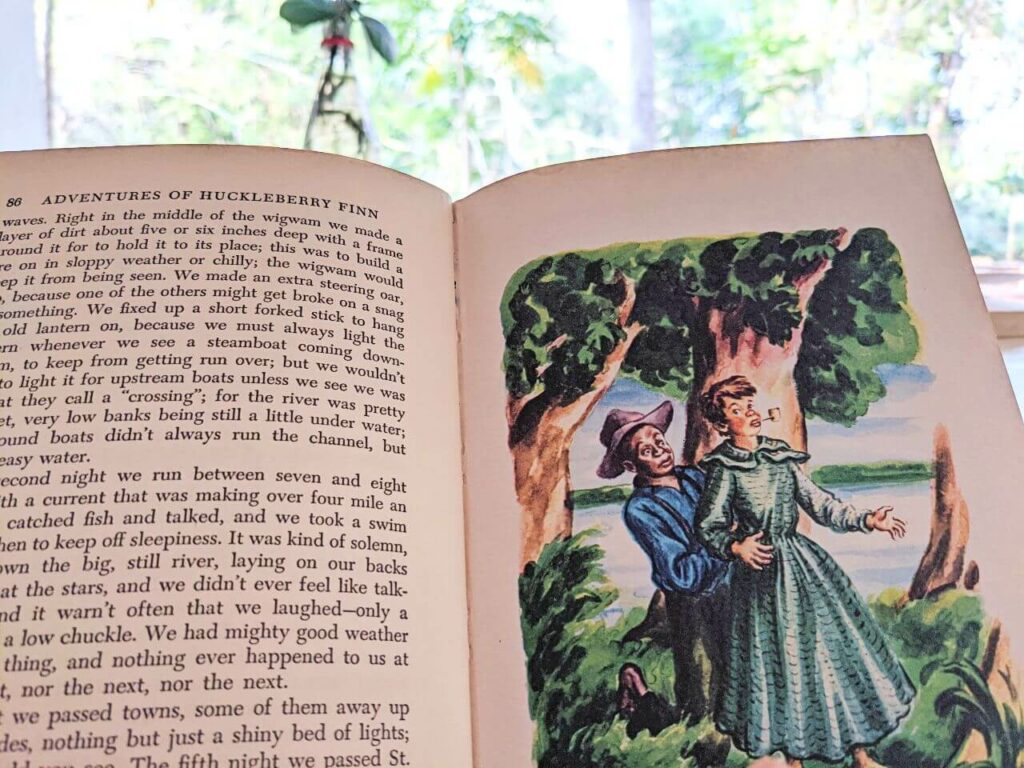
11. The Adventures of Huckleberry Finn by Mark Twain
A classic children’s book that makes you laugh, implores you to go easy, and by the last page, you are putting on your shoes and heading out that door, shouting, “This is not a children’s book. This is the best book there ever was. I am going out and having me some fun.”
We, adults, need such simple books more than children for we get so busy in the doing that we forget the being.
Writers need to sit in a room quietly and write, but we also need to let loose and have as much fun as we can, otherwise, what’s the point? I find that when I have laughed enough, played with my loved ones, and have had a bellyful of adventures, I can handle the solitude better and don’t mind the quiet as much. This is one of the best adventure books. And writers write better after they have enjoyed themselves.
I suggest The Adventures of Huckleberry Finn to all writers.
Buy The Adventures of Huckleberry Finn on Amazon
12. The Art of Travel by Alain De Botton
As a constant traveler, or an itinerant writer, also known as a digital nomad, I’m on the move throughout the year. With my partner and all our stuff in our car, I have been traveling through India slowly for five years (without the car for the past six months, as of January 2026). We stay in a place for a day, a week, or six months. We always have more to see, do, feel, process, and write about (the writing part is only for me).
The Art of Travel is my textbook, especially as a traveler, a partner, and a travel writer. If you are a travel writer, you should read this one.
Buy The Art of Travel on Amazon
13. The School of Life: An Emotional Education by Alain de Botton (One of the best books for writers because we have to understand our own inner landscapes, too)
True to its name, this one of Botton’s creations is an essential school of life. In schools, we aren’t taught anything about relationships, emotional well-being, failures, and picking ourselves up. Botton sketches humans’ inner worlds so expertly as if he had looked inside us all. He shows us how to live, love, and work well.
The School of Life is Life 101 for me, and I always recommend it to everyone (also part of my all-time best books to read).

Buy The School of Life on Amazon
14. How Emotions Are Made by Lisa Feldman Barrett
My cornerstone piece on Emotional Intelligence: Understanding Ourselves Better is founded on Feldman Barrett’s book. A modern neuroscientist, Lisa has explained how our brain functions and what emotions are, breaking down the science of neurons as Julia Child would a recipe for apple pie.
While writing Journeys Beyond and Within…, I referred back to How Emotions Are Made several times, rereading some pages, flipping through my highlights, and noting down references to quote in my memoir (there are many quotes). The philosophical understanding of human beings is not enough; we need to grasp the science of our species, too. Get How Emotions Are Made, and read it slowly.
Buy How Emotions Are Made on Amazon
15. Stumbling Upon Happiness by Daniel Gilbert
I think of Barrett’s and Gilbert’s titles together as a large encyclopedia on human comprehension. Through this book, I learned that happiness is a subjective experience. The best person to talk about her happiness is that person only (unique vantage point). And that we don’t remember our past well enough-we fill in gaps and exaggerate, and we can’t predict our futures - what we think will make us happy five nights or three years later might not. Stumbling Upon Happiness also showed me that how we perceive a situation presently has more to do with our current mood rather than the situation (How Emotions Are Made also told me that.).
Gilbert’s title is one of those essential science books every writer must buy in hardback and refer back to often. You’ll find many references from the book in my travel memoir.
Buy Stumbling Upon Happiness on Amazon
16. Sapiens: A Brief History of Humankind by Yuval Noah Harari
You have to read Sapiens, too. It is History and Humans 101. (I have written extensively about it in my best books to change your life list I shared earlier.)
17. My Uncle Silas by H.E. Bates
Fifty years ago, in an idyllic English village, Uncle Silas mends his garden, collects buttercups for wine, bickers with the housemaid, bakes bread, and does things that need to be done, whistling a tune. Uncle Silas stays out of his head and takes things as they come.
My Uncle Silas has made me a better writer. It has shown me that we, writers, can create worlds so bucolic that their sweetness can be sniffed from the browned pages themselves. This one would make you see the goodness of life; we need to hold onto the wonder of this world to write about it.
Oh, the title is also a tutorial on writing simple, silly stories.
Buy My Uncle Silas on Amazon (This is the complete collection, but the link is to My Uncle Silas)
18. White Fang by Jack London
Following a journey of two men and their six sled dogs in the Arctic, Jack introduces us to the cold wild country. With great descriptions full of the elementary forces of nature at work - the will to live, breed, and protect our bunch in the wild, White Fang is the story of a wolf.
White Fang is a very unusual book to include in this list of best books on creative writing. It is a fiction, travel, history, and nature book, all together. The title showed me how to write about animals and the fragile connection we have with them. And it also taught me that friendship, kindness, and love exist in every story, that we have to look for them, and that they bring balance in the end.
19. The Power of Habit by Charles Duhigg
You have to read this one not to repeat to yourself “I should write every day” but to truly process the compounding effects of simple habits. This is the book that has shown me the harms of bad habits and is the reason why I now observe the patterns I am falling into and course-correct often. For example, I was enjoying starting every day with reading, but later I was struggling to finish the day’s writing. “Just this small piece, only today,” I was saying to myself often, only stumbling to my pen at noon. Not anymore.
The Power of Habit is magic.
Buy The Power of Habit on Amazon
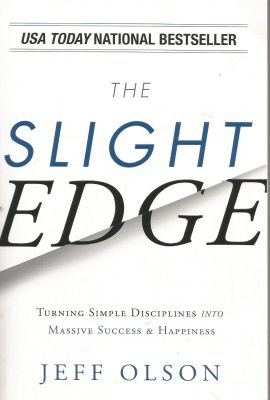
20. The Slight Edge: Turning Simple Disciplines into Massive Success and Happiness by Jeff Olsen
The Slight Edge demonstrates that success is not a sudden breakthrough but the result of a practice of showing up every day to do the simple and face the challenges. It shows us how small things done over a prolonged period of time can shift our lives.
“Successful people show up consistently with a good attitude over a long period of time, with a burning desire backed by faith. They are willing to pay the price and practice slight edge integrity.” – Jeff Olsen
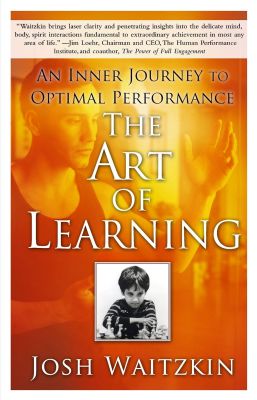
21. The Art of Learning by Josh Waitzkin
The Art of Learning taught me about the slight edge, too, but a little differently. The chess and tai-chi champion Josh laid down how investing in learning a skill is more important than the outcome. That if we have given ourselves to the process of learning, not resisting it, not trying to make it faster, then we have overcome the biggest hurdle. (I have linked my two Josh-inspired articles.)
I consider myself lucky that I read the above books early on in my writing life. Mostly, I don’t anguish over the results, don’t rush my writing, and tackle the hard hours face on. These practices have fastened my learning, rather than slowing me down.
All the above three books work together.
Buy The Art of Learning on Amazon
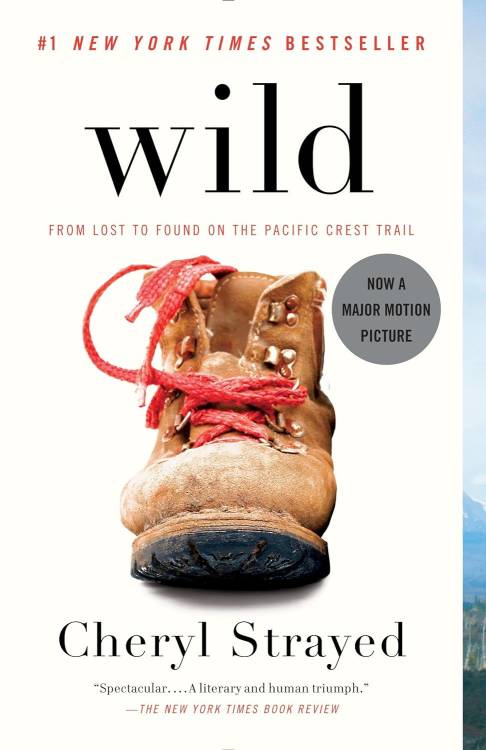
22. Wild: From Lost to Found on the Pacific Crest Trail by Cheryl Strayed
This is the story of a woman who, while grieving her mother’s unexpected death, decides to go on a thousand-mile hike that would take her three months through some of North America’s highest mountains.
Sometimes when we are broken, we put ourselves through something hard, because how much harder can it get? Suddenly, we find ourselves out of our minds into the real physical world that is screaming for our attention. Then the transformation begins without us knowing. Climbing through the rugged mountain paths, skirting rattlesnakes, and running away from harmful men, Cheryl pushed, bled, and cried. She kept going and came out on the other side, not healed, but out of the wilderness of grief she had lost herself to.
I relate to Wild a lot because extreme physical toil, especially climbing mountains, returns me to my senses, too. Many treks have made me realize that as long as I am breathing, I am good.
“Thank you. Not just for the long walk, but for everything I could feel finally gathered up inside of me, for everything the trail had taught me and everything I couldn’t yet know, though I felt it somehow already contained within me.”
Cheryl Strayed.
I am including Wild because Cheryl’s journey is much like a writer’s journey. You enter battered, you try to stay alive, and you come out bleeding and bruised but lighter, and perhaps happier and transformed. And Wild is a great book for nonfiction and travel writers. For fiction writers too, especially to see how to talk about emotional landscape.
23. The Drinking Well by Neil M. Gunn
The Drinking Well tells of shepherds in the Scottish Highlands. This is a classic novel that has a perfect character and a perfect character arch: a man who begins in a place, tests himself and the environment to the extreme limits, is sent to a city to build a better life by his family, tests the limits of the foreign environment, returns to his native land a more informed person and more than ever sure of the completeness and power of his land, and now puts to use whatever he had learned there and away and forms a new path based on innovation, not pathetic old practices.
A must-read for fiction and non-fiction writers.
Buy The Drinking Well on Amazon
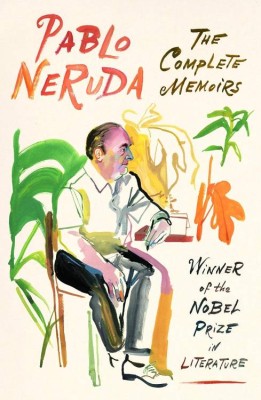
24. Memoirs by Pablo Neruda (One of the best books for writing as it helps us understand Neruda’s poetry and life; also a great lesson on memoir writing)
The Chilean poet takes us from his childhood into his growing-up years, through his love rendezvous, and when and how he started writing poems. We go with Neruda as an ambassador of Chile around the world, writing poetry, and inspiring peace and love in a war-fraught world.
I am also a bit partial towards Neruda (not that he needs it), as having spent more than six months in Chile, I recognize the sea, the country people, and the avocados the poet sings about. Neruda’s prose is also poetry. Memoirs is a heartfelt, ingenious autobiography from which I drew inspiration on how to write about my life. A must-read for nonfiction writers, and also for fiction writers and poets.
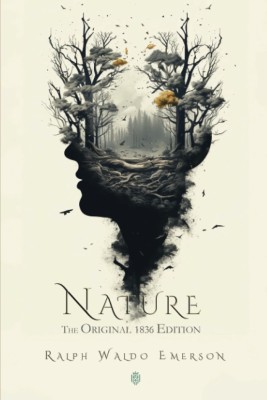
25. Nature (1836) by Ralph Waldo Emerson
The author interprets nature as a canvas upon which human life can grow and flourish. I found my own pleasures in this 80-page lush poetry on the natural world, wherein Emerson shows us how to draw metaphors from nature for our use, to find beauty, peace, and meaning in it.
“The moral influence of nature upon every individual is that amount of truth which it illustrates to him.”
Nature is, literally, the page on which we are writing, and everything that we write has nature inherent in it. This essay is Nature 101 for me.
26. On Writing: A Memoir of the Craft by Stephen King (One of my favorite how to write books)
I don’t have to give a reason to include a guide on writing by one of the best living writers. One of King’s most practical and simple advice, yet one that only an expert can share, is to write the word that comes to your mind first. If you use a thesaurus or a dictionary, the word won’t look natural. So don’t try to be fancy, just write with your vocabulary (which will grow as you read).
King made my life easy. Must-read.

27. Big Magic: Creative Living Beyond Fear by Elizabeth Gilbert
Big Magic is an essential book for every creator. It was such a surprising read because I wasn’t expecting the book to inspire me so much. Gilbert’s methods, ideas, and sacrifices to harness her creative instincts inspired me to create, risk, and live, not fearlessly but despite the fear.

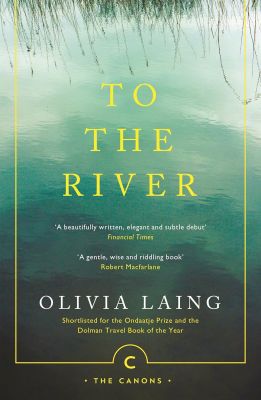
28. To The River: A Journey Beneath the Surface by Olivia Laing
This is a non-fictional account of Olivia Laing walking on foot from the source to the end of the river Ouse in England. Olivia Laing is known to live the journeys she is curious about and then writes about them, interweaving her experience, history, and related stories. Here she discusses the river and its surroundings, the folklore and mythology associated with the area, and the history of the people who lived around it, and people who fought and died on it and in it. Laing also allows her own loneliness in the wake of a breakup to drip into the stories and writes that the past never leaves us alone, that life has a continuous flow, similar to that of a river.
What lies beneath the surface of the river? What is underneath all our lives? How does our past affect us? All these questions arise from reading the book.
I recommend To The River to all writers. This is also an unusual book to make it into this list of good books for writers. But this title intertwines an outer and inner journey perfectly. Laing’s memoir showed me that it is possible to take such arduous journeys, journeys that not only span a vast physical space but also a vast emotional spectrum and boundless time. She flits between the past and the present like a butterfly shuttles between flowers, drinking their honey. To The River is as much of an adventure for the reader as it must have been for the traveler and the writer.
As a non-fiction and travel writer, I have been inspired by this memoir and have had many ideas about the kinds of journeys I want to make and how I would like to write about them.
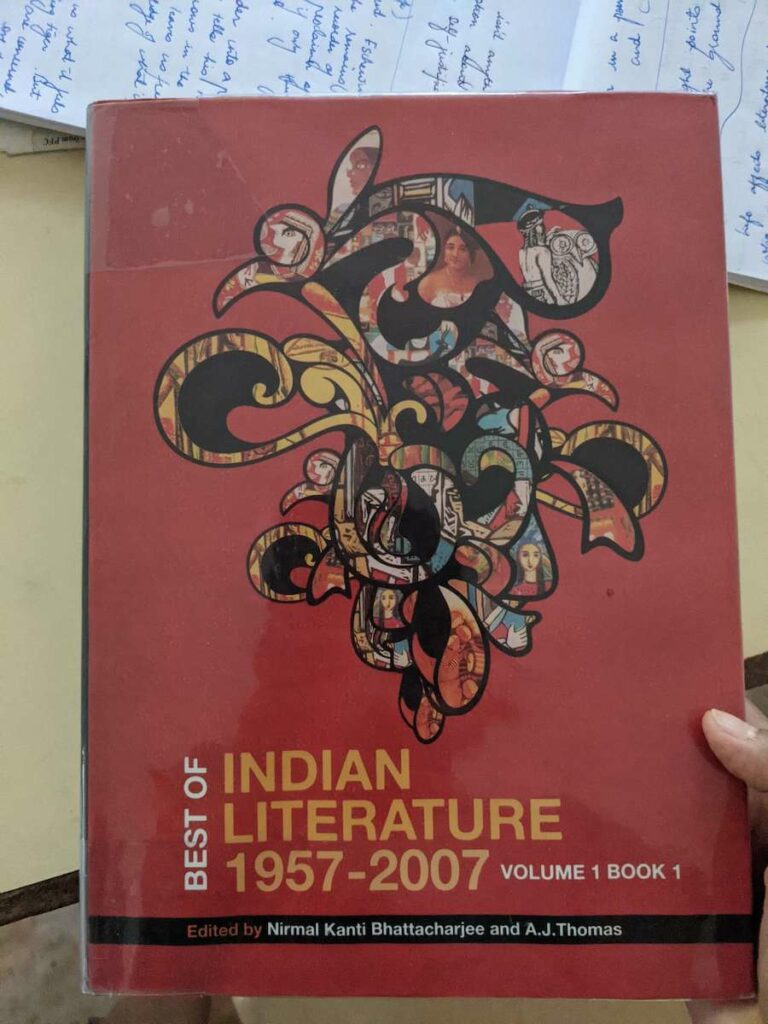
29. Best of Indian Literature 1957- 2007 Volume 1 Book 1 Edited by Nirmal Kanti Bhattacharjee and A.J. Thomas
This is a collection of undiscoverable and priceless stories, poems, and essays of writers from around India. All writings have been translated into English from Assamese, Bengali, Oriya, Hindi, Tamil, Kannada, Urdu, Sindhi, and other regional Indian languages.
I wouldn’t have found some poems I read in the book anywhere else. Most of the work of these brave Indian writers who wrote in their mother tongue is buried under English books and curtained by the enchanting visual media and forever trickling feeds.
In just one book, I read so many writers from all parts of India, almost as if I touched the soil on which they walked, smelled the wind they breasted, and stood under those trees that shaded them. Pick up the Best of Indian Literature to discover old and new Indian writers, and also to learn how to tell stories closer to home. Relevant for both fiction and nonfiction writers.
Buy Best of Indian Literature on Amazon
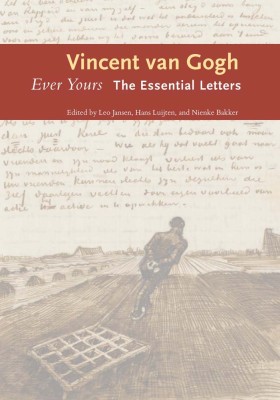
30. Ever Yours: The Essential Letters by Vincent van Gogh
Ever Yours contains a broad selection of 265 letters from a total of 820 that Vincent wrote to his brother Theo and friends. All his life, Vincent could only sell one painting and hardly put two meals together. In the letters, Vincent informed his brother of the littlest expense of a pen or paint, asking for money. He explained the progress of his pieces in detail, how much he still lacked and needed to learn, and drew miniature sketches of the things he had drawn that day.
The courage needed to pursue any art, the relentless work, the process of learning by doing, cutting, and redoing, rejection, the doubt every artist buries himself in, and how society shuns anyone who sets out on her own, amongst other hardships on a creator’s path, are the themes of the letters.
“Work as a way to ward off evil - When one labours at difficult work and strives for good results, one fights the good fight, the reward of which, surely, is already this: that one is preserved from much that is evil.” Van Gogh.
Every letter of Van Gogh is a glowing cosmos of practice, determination, and endurance – and will change your perspective on hardships and sticking it through despite them (linked is an inspiration drawn from one of Vincent’s letters). For me, Van Gogh’s letters have been the tonic to go on, especially on hard days.
31. I read many travelogues, short story anthologies, and travel book series while writing my travel memoir. So many of them were so useful. Sharing some of the best ones here:
- An Innocent Abroad: Life-Changing Trips from 35 Great Writers,
- Better than Fiction: True Travel Tales from Great Fiction Writers,
- By the Seat of My Pants,
- Bedtime Adventure Stories for Grownups by Anna McNuff,
- Chickens, Mules, and Two Old Fools by Victoria Tweed,
- and A Simple Life: Living off grid in a wooden cabin in France by Mary-Jane Houlton.
You can find more travel books in the collection of my favorite travel titles.
I haven’t added Proust, Tagore, Tolstoy, Pritam titles here. I know you don’t need me to tell you to read good to do good.
Definitely complement this list with my all-time best and life-changing books. I have referred to the collection multiple times in this piece. I cannot list all those books here, and so have mentioned only a few that are a must for all writers. But more books there, I think, are relevant to the skill. To be a good writer is to be a good human, too. To know what to do when the time comes. And those titles are fundamental. For example, some that I haven’t mentioned here are: Anne Frank (to know how to write a memoir or talk about our memories and personal events), Man’s Search for Meaning, and The Little Prince.
Which is one of your best books on writing books?
MY FIRST BOOK
Journeys Beyond and Within...
IS HERE!
In my vivid narrative style (that readers love, ahem), I have told my most incredible adventures, including a nine-month solo trip to South America. In the candid book, the scoldings I got from home for not settling down and the fears and obstacles I faced, along with my career experiments, are laid bare. Witty and introspective, the memoir will make you laugh and inspire you to travel, rediscover home, and leap over the boundaries.
Sikkim Express: "Simple, free-flowing, but immensely evocative."
The Telegraph Online: "An introspective as well as an adventurous read."
Grab your copy now!
The memoir is available globally. Search for the title on your country's Amazon.
Or, read a chapter first. Claim your completely free First Chapter here.
Want similar inspiration and ideas in your inbox? Subscribe to my free weekly newsletter, Looking Inwards.
First off I want to say Danke schön Priya for the wonderful collection of TBs.
Took me the entire evening!
As a writer who believes that I would I need to actually see the world in other to write about it and in the past 3 years I’ve found myself traveling a lot not just across nations and States but most oddly with books 😅
Working on my debut piece right now, I have faith in this recommendations of yours and I believe as I read ’em book by book I’ll dive into a journey that could only lead to a destination-journey…
As my grandmother would say ” A writer remains a wanderer” with the rise in travel writing culture I see how true it seems…
I find this really useful insights.
So Danke 😊
Purple hearts 💜 💜 from ~ Agy 💜
Thank you, Agy. Danke to you too for reading and this beautiful comment. haha! I am not sure if I should be sorry or happy that it took you the entire evening. You are so right, as writers we need to be travelers too. All the best for your book. Your grandmother sounds so wise. I wish her well. Glad I could be of use. Enjoy the books and good luck 🙂
Regards
Priyanka