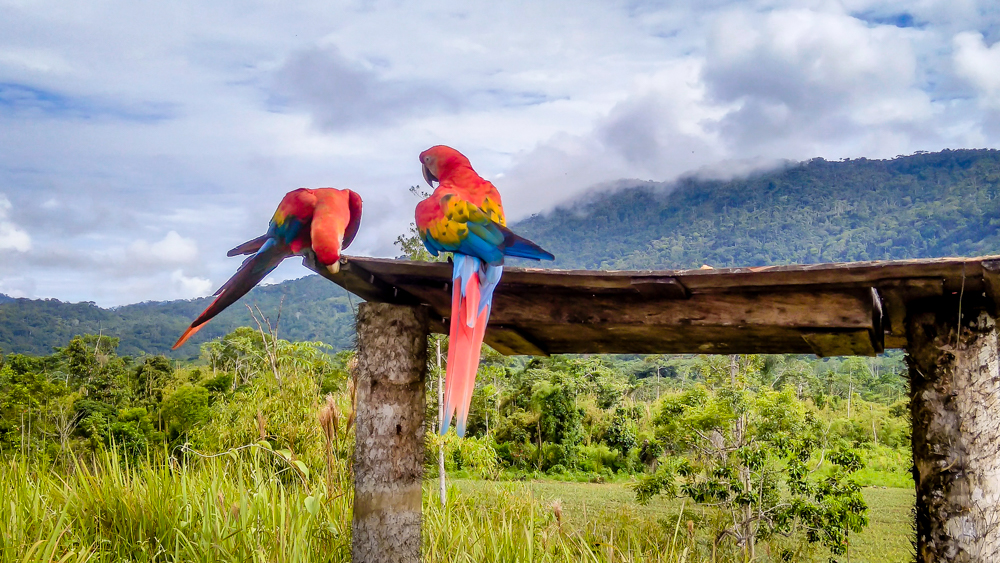
Getting stuck on borders multiple times and having paid a lot of extra money for the last moment flights because I could not cross into the neighboring country without a visa, I realized that an Indian passport is not the strongest one. Though there are ways to make it stronger. A valid US tourist visa (or a US business visa) not only allows you to visit the US, but with a valid US visa you can also travel to many more countries which let you in with a “visa on arrival” or an e-visa (if a US visa is stamped on your passport). For example Peru, Colombia, Guatemala, Costa Rica, Georgia, Mexico, Philippines, Turkey, and more.
To make my dream of traveling to the US and these countries come true, I applied for a 10-year B2 US tourist visa, and, it was approved.
Please read through the detailed process of getting a tourist visa for the USA from India. I also pledge to clear all the myths that envelope the US tourist visa process.
White roses, pink bougainvilleas, golden marigolds, and red hibiscuses bloom throughout the day in my parent’s garden, but then comes night, and the queen of the night takes over. These memories from SA waft through my being as the scent of the queen of the night drifts through my parent’s garden and settles in our wistful dreams.
Hope you enjoy these amazing memories from the time I was traveling in South America.
Covid-Related Travel Update Jan 2024 – Peru is now open to international travelers. And as per Supreme Decree 130-2022-PCM in Peru’s official gazette El Peruano, Covid entry requirements and all other regulations and restrictions were lifted. You can also look at the official website of the Peru government for more information. My guide to Peru Travel Visa would be helpful.
Peru: Poems and Pictures
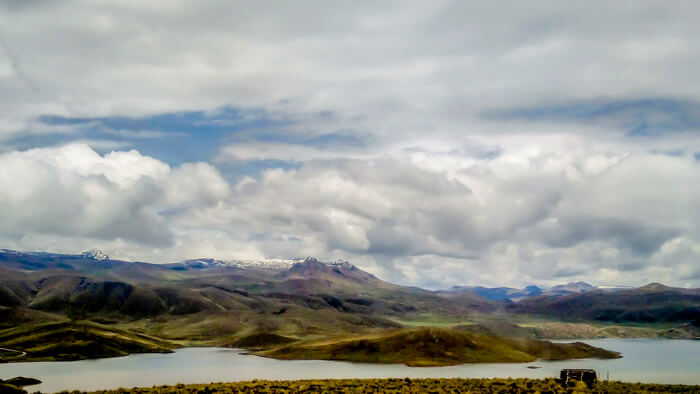
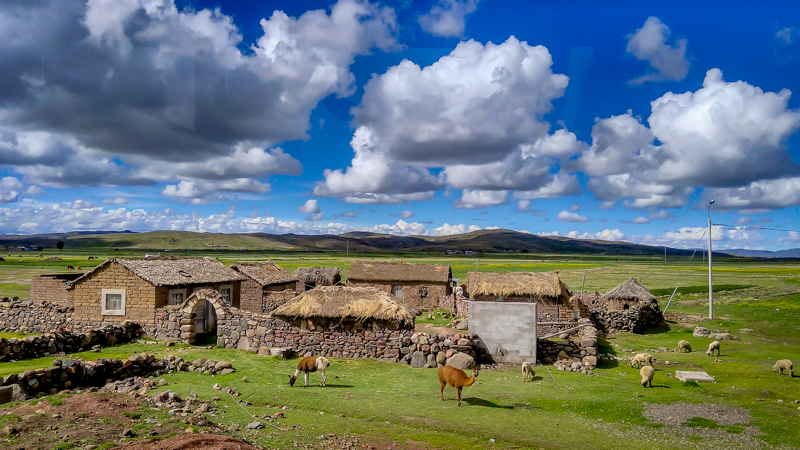
Oh dear friend, would you convey my message if you travel to the mystical land of the Incas.
Could you find that old lady who guided me to the bus and tell her that I dream of her hair as I dream about the Himalayan snow.
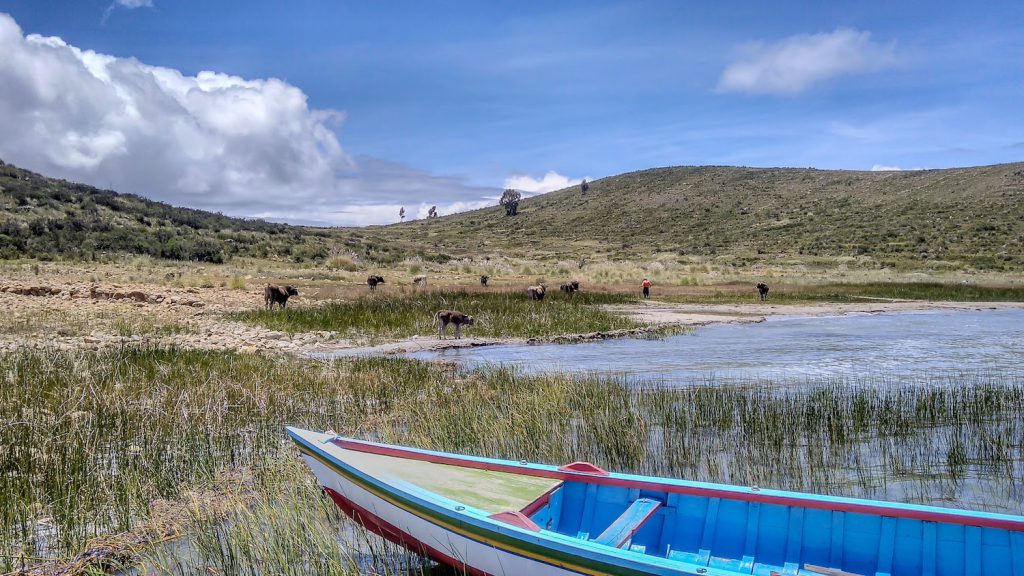
Could you find that little mystery-eyed girl who would be bigger by now and whisper to her that I would come again to play the game of “donde estas” with her in her home on Lago Titicaca.
Covid-Related Travel Update Jan 2024/2025/2026 – Peru is now open to international travelers. And as per Supreme Decree 130-2022-PCM in Peru’s official gazette El Peruano, Covid entry requirements and all other regulations and restrictions were lifted from November 2022. You can also look at the official website of the Peru government for more information. My guide to Peru visa for Indians would be helpful.
Peru is an easy country to enter. People from the US, most countries in the Americas, and Western Europe do not need tourist visas for Peru. But it is different for the Indian citizens.
Peru Visa for Indians
The process of the visa to Peru was worth the effort to see the gorgeous country (here’s my extensive travel guide to Peru). But the process simplified soon after I visited Peru.
Since March 2017, Indian nationals holding a minimum six-month valid visa or who are permanent residents of either the US, Canada, United Kingdom of Great Britain and Northern Ireland, Australia, or any Schengen member country can enter Peru for one-eighty-days (180) per year without a Peru visa (for tourism and business visits).
The maximum period of stay will be up to one hundred and eighty (180) calendar days, either as a continuous visit or several consecutive visits, during the term of one year.
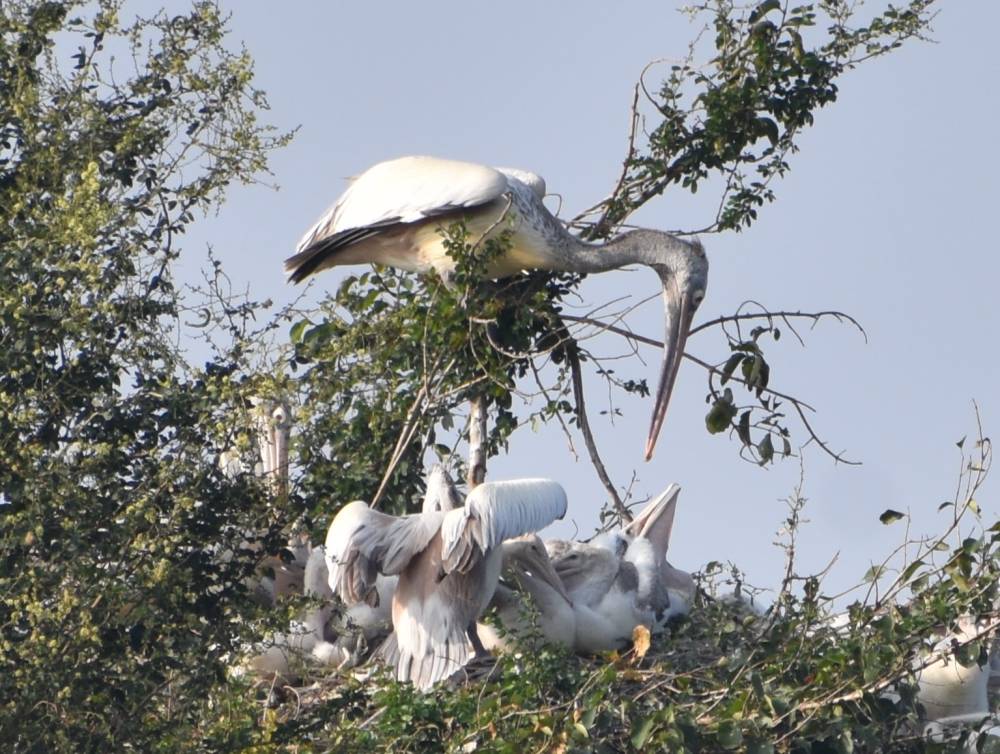
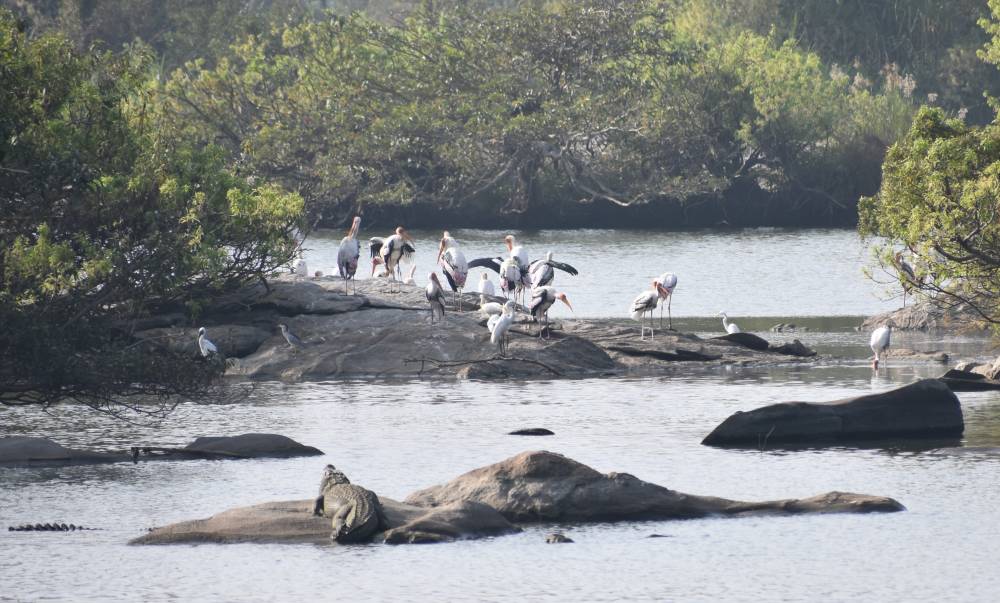
As we approached the Ranganathittu National Park, we could see big birds flying above us in groups. That part of the Mysore city felt like a forest. Soon we would see crocodiles basking on rocks and islets full of young chicks chattering incessantly for food.
Ranganathittu Bird Sanctuary is a natural reserve in the Mandya district of Karnataka. The reserve is three kilometers from the historic town of Srirangapatna (another important place in Karnataka) and sixteen kilometers (10 mi) north of Mysore. The drive to Ranganathittu bird sanctuary from Bangalore took us about four hours.
Ranganathittu islets were formed when an embankment across the Kaveri river was built between 1645 and 1648 by the then king of Mysore. These islets, originally numbering twenty five, soon started attracting birds. Once upon a time, ornithologistSalim Ali observed migrant birds nesting in huge numbers on the islands. Upon his suggestion, the King of Mysore declared the islets a protected area in 1940. Now the sanctuary is formed by six of these islets on the Kaveri river.
As soon as we arrived at Ranganathittu, we purchased a ticket and went inside. As we went inside the sanctuary, we could see the Kaveri islands below us, and above us in the sky flew painted storks, ibis, pelicans, and herons. At least those were the birds I could identify. When we took the special boat ride that takes in seven people and goes around the sanctuary for forty minutes the boatman told us that the Ranganathittu reserve hosts at least one hundred seventy bird species. Some of the common birds found are painted storks, Asian openbill storks, woolly-necked stork, pelicans, river terns, egrets, cormorants, herons, and varieties of kingfishers.
The best time to visit Ranganathittu Bird Sanctuary is from December to February, and we were well within the time frame. During these months migrant birds come to Ranganathittu from as far as Siberia, South America, and the Himalayas, and they all nest in the bird sanctuary. You can also spot crocodiles, otters, mongooses, and flying foxes there. Just keep your eyes open and binoculars in focus.
I penned down my experience in Ranganathittu National Park in a poem. After all, what is better than nature and poetry?
Writing down that poem here. Hope you enjoy it 🙂
Painted storks in Ranganathittu
As we entered the sanctuary, painted storks glided above us in the clouded sky,
and with our heads tilted towards the heavens,
we walked by the side of the muddy Kaveri,
to see flocks and flocks of white and grey birds just perched onto the canopies of the Arjuna and the Acacia on the islets.
The crisp air buzzed with their songs and shrieks,
though I couldn’t identify even one of those notes.
We gazed at the distant foliage to recognize the winged-ones,
but our eyes instead discovered three crocodiles who rested on the rocks with their powerful jaws wide open,
as if they were waiting for a fish to dive into their mouth.
Their stillness made us wonder if they were real or fake,
and then we saw one of them gracefully gliding into the coolness of the water,
Covid-Related Travel Update, Jan 2024/2025/2026: Chile is open to international tourists. Visit the Chilean government’s official website for travel-related information and regulations. Don’t forget to read the government’s rules to be followed in public spaces here. My guide to Chile visa would be helpful for Indian citizens.
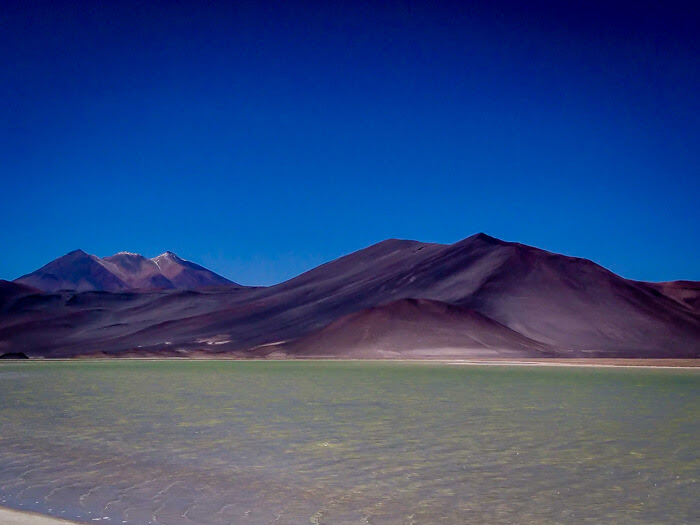
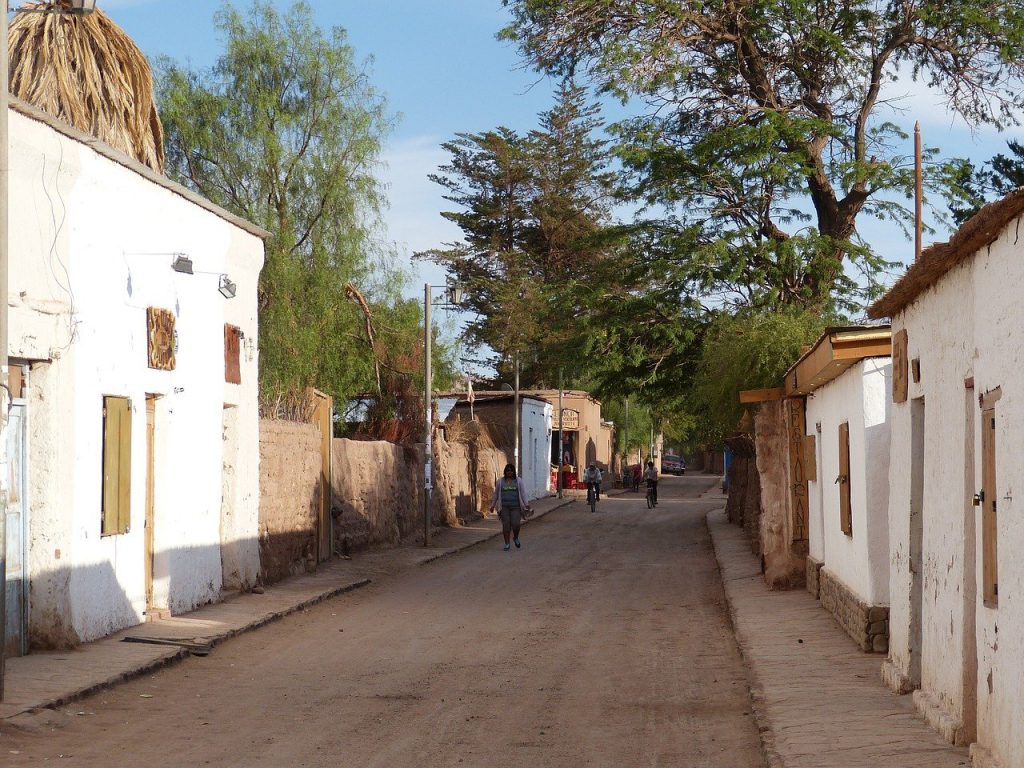
They say that the Atacama is the driest desert; I disagree. My time in the capital city San Pedro de Atacama and in the desert was fascinating.
The Atacama Desert and Its Many Wonders
The blue lagoons quenched my interminable thirst for beauty,
the flamingos still fly right through my dreams,
the imposing mountains showed me how high we could reach,
and the deep valleys let me look so beyond that I didn’t even know existed.
Come, let’s ride this journey together,
because my friend,
you would need someone to hold onto,
when you are not sure if what you gape at is the reality,
Covid-Related Travel Update, Jan 2024/2025/2026: Chile is open to international tourists. Visit the Chilean government’s official website for travel-related information and regulations. Don’t forget to read the government’s rules to be followed in public spaces here. My guide to Chile visa would be helpful for Indian citizens.
Sleeping on the semi-sleeper first seat in front of the wide glass window on the second floor of the bus, which was driving from Santiago to Calama, I woke up to find ourselves driving next to the Pacific under a star-studded, deep-blue sky which was complemented by a shimmering rotund moon. Even the contour of the immortal rabbit that Ruskin Bond says was dropped on the moon was difficult to trace on the bright moon. It was like a painting.
Having admired the scenery, I dozed off again and kept waking up intermittently until we arrived in Calama. That was when I pulled myself out of hibernation and, an hour later, I was riding on another bus to San Pedro de Atacama, Chile. At the end of this blended twenty-five-hour journey, I stumbled out of the bus like a zombie and the glowering February sun focused all its anger on the first-time visitor. Luckily, my hostel was a five-minute walk from the bus terminal. I strapped on my blue backpack and strode as I had loaded the directions to the hostel in Google maps.
Covid-Related Travel Update, Jan 2024: Chile is open to international tourists. Visit the Chilean government’s official website for travel-related information and regulations. Don’t forget to read the government’s rules to be followed in public spaces here. My guide to Chile visa would be helpful for Indian citizens.
One of My Hardest Travel Experiences: Or Was it So?
I donned my white formal dress, put on my red matte lipstick, lined my eyes with Kajal, brushed my hair and let them fall loose, strapped my G-Shock on my right wrist, checked if I had Chilean pesos, hung my black leather purse on my shoulder, picked up my black Lenovo phone and earphones, launched Google maps, and walked out of the Airbnb to go for my interview at the English teaching center located in downtown Santiago. I had had to visit the center a few times to secure an interview with the English owner of the promising institute.
I took the lift to the ground floor of the building and having exchanged pleasantries with the joyful guard, walked out, and found myself face-to-face with the glowering January sun. I strode through the almost-empty roads towards the closest bus stand which was frequented by the bus that would have directly taken me to the cosmopolitan center of the town.
Mythology has always fascinated me. As a child, I used to read all the thin and thick Hindu mythological books kept in the rectangular wall-hooked showcase temple in our mandirwala or the temple room. I grilled my mother about Shiva and Lakshmi and Parvati and Vishnu and Hanuman and the snakes and the elephants and the monkeys and the Ramayana. Then I visited college and opted for literature courses and read all the different versions of Mahabharata that I could put my hands on.
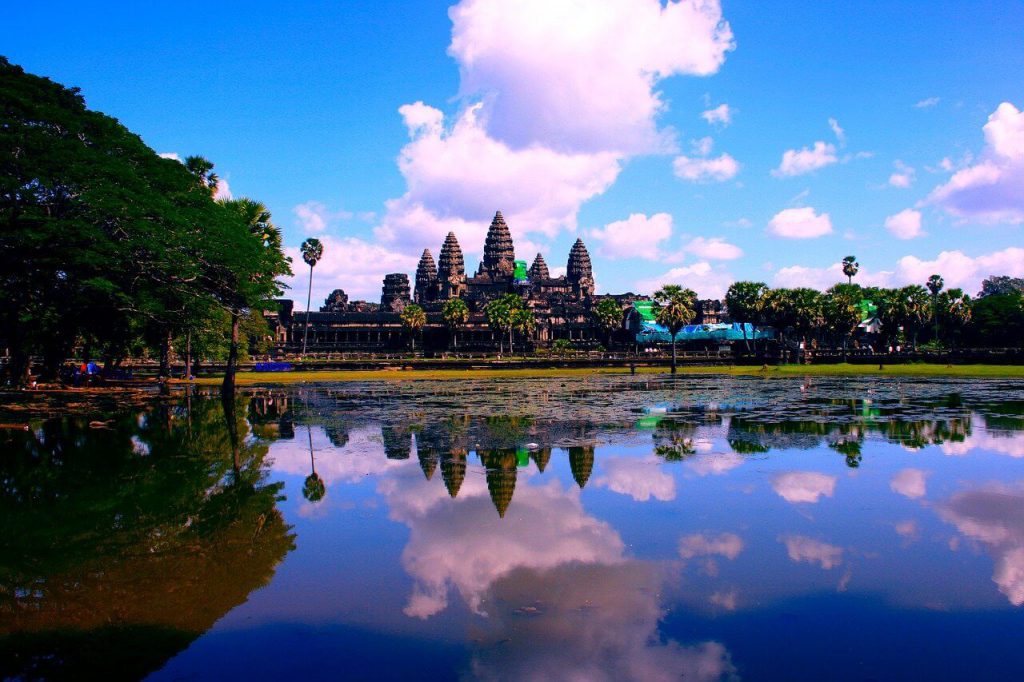
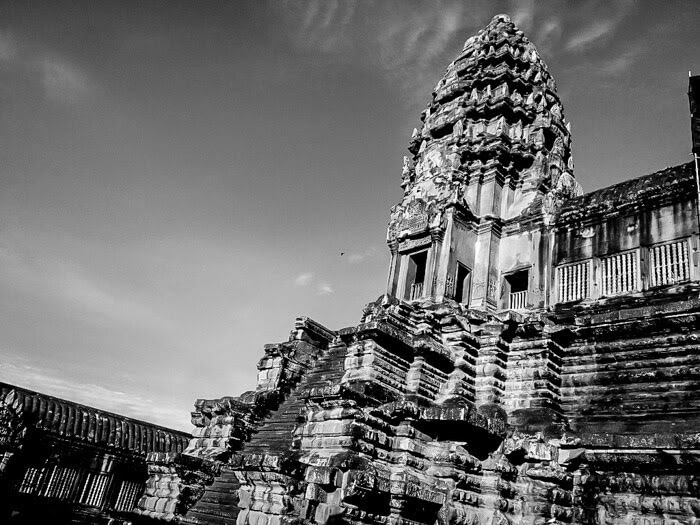
So while walking around Angkor Wat or the City of Temples, when I saw that the fellow international travelers were mesmerized by the temple but also confused, I donned my narrator cloak and recited tales of the Hindu mythology and exposed the personal lives of the millions of gods and goddesses that Hinduism has.
My Cambodia Travel Blog on the Atrocities Unleashed on the Country
I was climbing the stairs of a high school in Phnom Penh, the capital of Cambodia. No, I did not intend to repeat high school to recognize the petals and sepals of a flower better. The school wasn’t ordinary. The faces of the men and women that had been tortured and killed in its classrooms stared at us from behind the glass frames hung on the bloodstained walls. The rusted iron bars, withering waterboards, and used bloody clothes kept in those classrooms narrated a gruesome story of the ruthless Cambodian massacre, that happened not so long ago. The metal shackles with which people were tied to the waterboards and to the iron bars were still chained to them; I assume those metal chains couldn’t be used for anything else now.
Unwillingly, I vividly imagined the bodies possessing those faces and donning those gory clothes tied to the iron rods with the cold shackles. A guard came throughout the day to beat them and torture them with electric shocks as the helpless stifled on the floor. Or to cut them with knives and suffocate them with plastic bags. Blood oozed out of the wounds of the tortured but medicine was out of the question. Four small spoonfuls of rice porridge and watery soup of leaves were given to them twice a day.
My skin crawled. I shivered in the scorching month of June.
One of My Favorite Places to Visit near Bangalore: Panchapalli Dam and Bettamugilalam Village
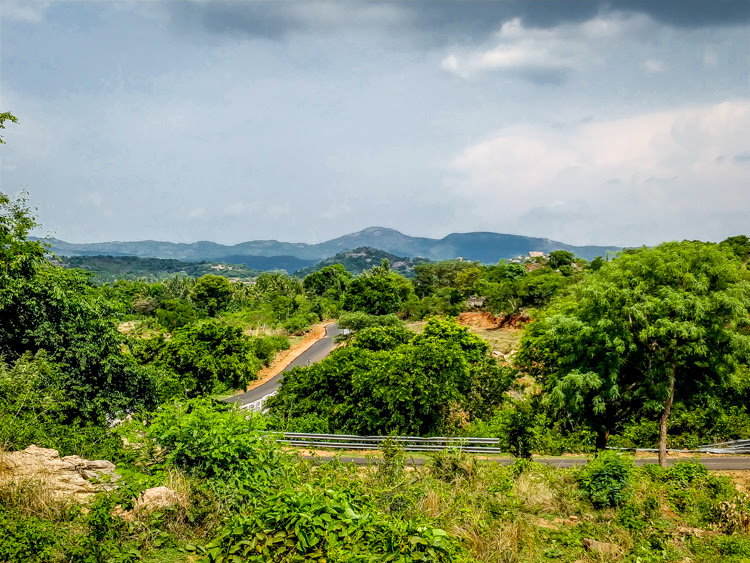
One needs to control his or her mind to do anything in this world. Even the most enlightened of us all, Plato, Seneca, Marcus, Aristotle, Buddha, Socrates, valued this virtue. I do not possess this quality, yet, and hence couldn’t sleep the Saturday night before the Sunday drive. At 4 am, when I disabled the alarm and dragged myself out of bed, I felt as if a hundred pins pierced my eyes.
Determined to hit the road, we packed our country-egg-omelet and Amul-butter-pasted sandwiches, that I had already prepared the night before, in tiffin boxes and then in a backpack, along with bananas, water bottles, and Unibic protein bars. We wanted to hike the world. Soon, we sped on the road in search of a green and sunlight-lit golden Sunday in some distant hills or next to a lake or a dam, may be accompanied by an elephant or two.
I pre-landed in Bangkok at 5 AM. In the on-arrival visa line, a friendly attendant helped me skip the line and processed my visa faster. The airport was far out of the city and having decided that I would take public transport, I climbed into an about-to-crumble bus to go into the city.
In the three-hour-long bus ride, as long as the flight from Bengaluru to Bangkok, a lady passenger helped to hold my bag and told me that I was beautiful as I managed to not-faint in the crowded aisle. The bus crawled a kilometer in almost an hour. Due to my skepticism of being able to explain the situation to the angry and rude lady ticket collector and the bus driver, I didn’t leave the bus to hop into a taxi. She kept buying dumplings for him from the street while my stomach growled.
The bus ride wasn’t enough torture that I had to climb four levels of steep, dingy stairs with my suitcase to reach my just-enough, single, air-conditioned room.
Tired, hungry, and lonely, I went down for food and ate a mediocre Pad Thai. Having grabbed a few cold water bottles from the fridge downstairs, I climbed back up again. Sudden rudeness and a hint of racism coupled with sleep deprivation and loneliness made me sleep for almost five hours.
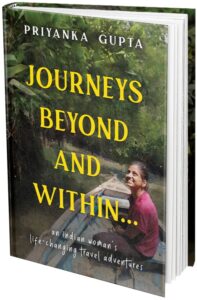
In my vivid narrative style (that readers love, ahem), I have told my most incredible adventures, including a nine-month solo trip to South America. In the candid book, the scoldings I got from home for not settling down and the fears and obstacles I faced, along with my career experiments, are laid bare. Witty and introspective, the memoir will make you laugh and inspire you to travel, rediscover home, and leap over the boundaries.
Sikkim Express: "Simple, free-flowing, but immensely evocative."
The Telegraph Online: "An introspective as well as an adventurous read."
For more than eight years, I've read and written night and day to make On My Canvas—my sustenance and life's focal point—a place of inspiration, trial, adventure, and happiness. Everything here and my weekly newsletter, Looking Inwards, is free. No AI. No ads. No paywalls. No sponsors. No paycheck.
If my blog has served you in any way, please consider making a one-time or a consistent donation. Your generosity will not only support the idea that we can create a life of our choice but also sustain good-quality free writing online. I'll be thankful forever.