Leaving Behind a Forest to Get Into Another One: Finding Accommodationin Wayanad (Kerala)
As I said in the post on the Wayanad Wildlife Sanctuary, I wasn’t happy leaving the 100-year-old sylvan cottage that was my home for three days.
The last morning in the Sanctuary’s forest stay was-let’s just say-not easy on me. The previous night, my partner, Sagar, and I finished a bottle of whiskey. In the morning, I showered, and we took a jungle safari. Mommy elephants and baby elephants crossed the road ahead of us. My joy was a little subdued. After the safari, which ended at eight, I packed the rest of the things, brushed, walked, had tea, and wrote for more than an hour.
Please note: This is the fourth episode in the Wayanad series. Here’s the First, Second, and the Third.
Saying Goodbye to My Home in the Coffee Village in Wayanad
I woke up at 7:45, showered, and made breakfast: onion parathas and tea. We had to check out of the homestay. Every raw vegetable was to be made and everything to be packed. I did the dishes, cleaned the kitchen, and heated the dinner leftovers. The food was on the table all night. There was no fridge. I boiled potatoes and washed okra. My partner, Sagar, and I walked around on the porch facing the estate, finally sitting down for a bit. By 11:30, I started to work. Just an hour and a half and then I’ll finish the rest of cooking. Sagar was working, too. He would do all the packing. I would wrap up all the food things. At 1, I got up and strolled around a bit. From the porch, I called, “Shobha, Shobha,” as she had asked me to do the previous evening.
I woke up at seven and put water on the stove for my bath. Outside on the porch, I did my version of surya namaskars in front of the yellow sun that had replaced the golden moon. After washing myself, I put tea on the stove. By the time my partner, Sagar, woke up, tea was boiling. No breakfast for we had had a heavy dinner the previous night. I worked for two hours and when AB, our host, didn’t show up like the previous morning, Sagar called him.
Please note: This is the second episode in the series. If you haven’t read the first, get it here: Finding a Home in a Village in Wayanad (Kerala): Day 1, Episode 1 A Regular Day of Two Travelers in a Tea, Coffee, and Betel Nut Village in Wayanad Day 2 We slept well and woke …
My Mysore Travel Guide-Visiting the Places to See in Mysore City for a Week
After checking out of a tiny room in a peculiar highway hotel outside Mysore (also known as Mysuru), my partner, Sagar, and I took deep breaths.
“I’m so relaxed after getting out of that place. We shouldn’t have stayed there for three nights,” I said, thinking about how the sleepy hotel staff had looked at us in shock when we had returned to the hotel after lunch. Rubbing his eyes, the receptionist had asked, “You didn’t go sightseeing?” without even unlocking the main gate which he had locked from inside. Sagar and I had waited on two tiny iron chairs in the airless lobby while the housekeeping woman haphazardly cleaned our room, leaving the garbage as is, the bed unmade, and damp towels lying in a coil. Then I squeezed onto the tiny desk in the corner, and Sagar managed to work from the bed.
As if broken from a reverie, Sagar replied, “Yeah, like a weight is lifted off my head.”
When we drove to a highly-praised dosa eatery (and on top of the list of places to visit in Mysore) in downtown, the hotel room was already a thing of the past. Watching the Mysuru city go by us, we discussed our options. Either we could look for a good hotel in the city centre near the important historical places, Mysore being the the capital of the Kingdom of Mysore from 1399 to 1947, or drive further on. Our eyes were on Kerala.
I had traveled from Bangalore to Mysore with my parents thirteen years ago and visited the main places to see in Mysore city: the Mysore Palace, the city zoo, Vrindavan Gardens et cetera. Sagar also didn’t care much about exploring every nook and corner of Mysuru. We had been to Ranganathittu Bird Sanctuary (Karnataka) twice. Just a day earlier, we had strolled around an unmarked dam and lake near Mysore, spotting hundreds of migratory birds (We visited that lake from the highway hotel. Though it’s not on any list of places to visit near Mysore, it should be. Hint: Look for blue stretches around Mysuru and explore slowly.)
“Let’s see how we feel after breakfast,” we said to each other.
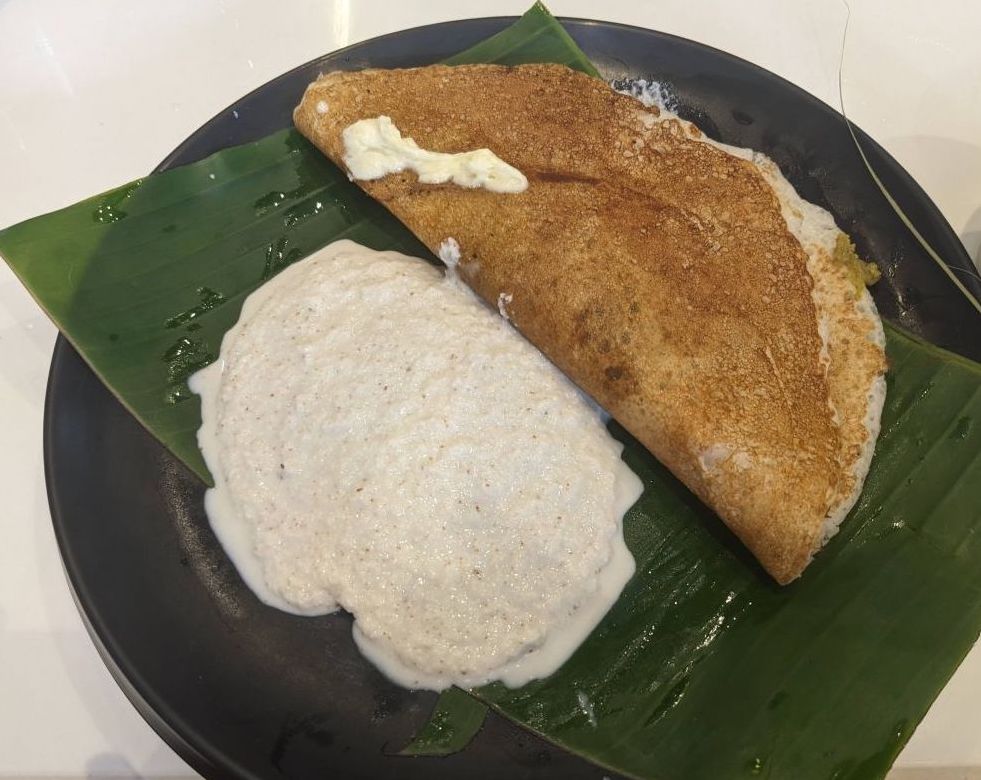
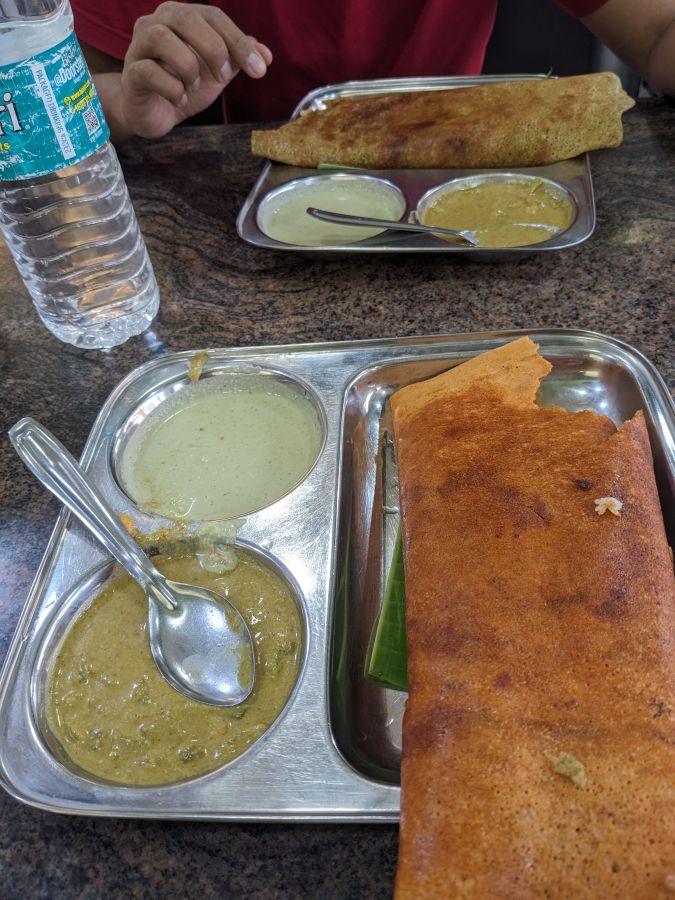
The quintessential dosa, Mysuru City, Karnataka
The masala dosa was a bit limp, not like the super crispy Karnataka dosa I was expecting. The place was, sadly, overhyped.
After tea, we sat under a tree on the dusty road, planning our day. Sagar had taken the day off, given how impromptu we were being.
“Do you want to drive to Bandipur or Nagarhole National Park today?” He asked, as we had been asking each other since morning.
“No. I’m so tired I don’t think I can drive today. It’s a long drive. And I don’t think even you’re up for driving for long hours.” I rubbed my eyes which had suddenly become heavy, as if wanting to close.
“No, I’m not.” He replied, his eyes tired.
“Let’s look for a hotel and stay.” After the dosa, my body had slowed down, screaming for rest and sleep. Imagining myself lying down on a bed was bringing immense relief.
We both started browsing Google Maps for good places to stay in Mysore. He was looking at hotel websites.
Finding guest homes and family stays in India for three years, we are both wary of accommodations. Some hosts don’t clean, many don’t provide drinking water, others are noisy or intruding, and so on. Somewhere staff doesn’t care, other places don’t have parking, and sometimes the toilet doesn’t flush. I can filter out well-reviewed properties only by a few red flags that I know would be unbearable in reality.
I found Mannar, a hotel with a 4-star rating (after hundreds of reviews). None of its reviews said dirty, uncaring staff, noise et cetera. One or two poor reviews where the experience might have been spoiled due to a one-off reason didn’t worry me. Parking was mentioned.
We didn’t call. Fifteen minutes later, we squeezed into a narrow, busy street and parked outside the Mannar hotel across from a dung-smeared cow munching grass from a round stone trough.
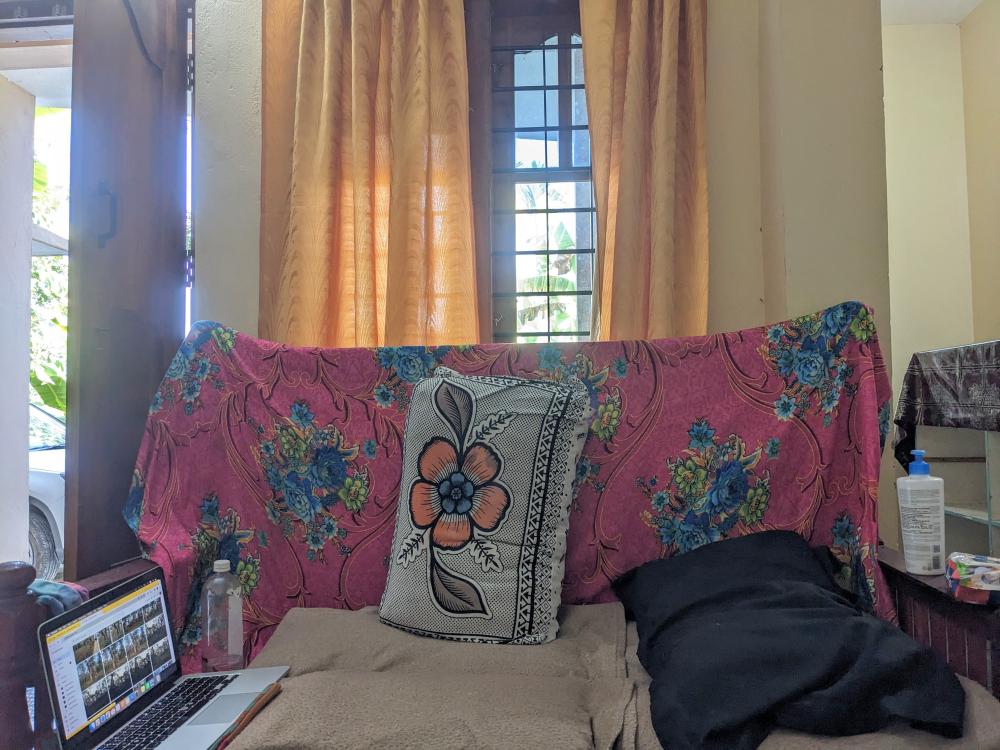
Sitting on this makeshift work desk (that’s actually a couch) on the ground floor of a home in Chitragiri village in Wayanad is a blessing. Maybe the Christian family who owns the place might say that Christ has bestowed this blessing upon us. A big white church stands on the opposite side of the road. It is called Saint George Church Chitragiri, if I am not wrong. It’s large but narrow white facade bolts upright while the rest of the church sprawls behind. A tea plantation lies next door to the church.
my makeshift work desk, Wayanad village, Kerala
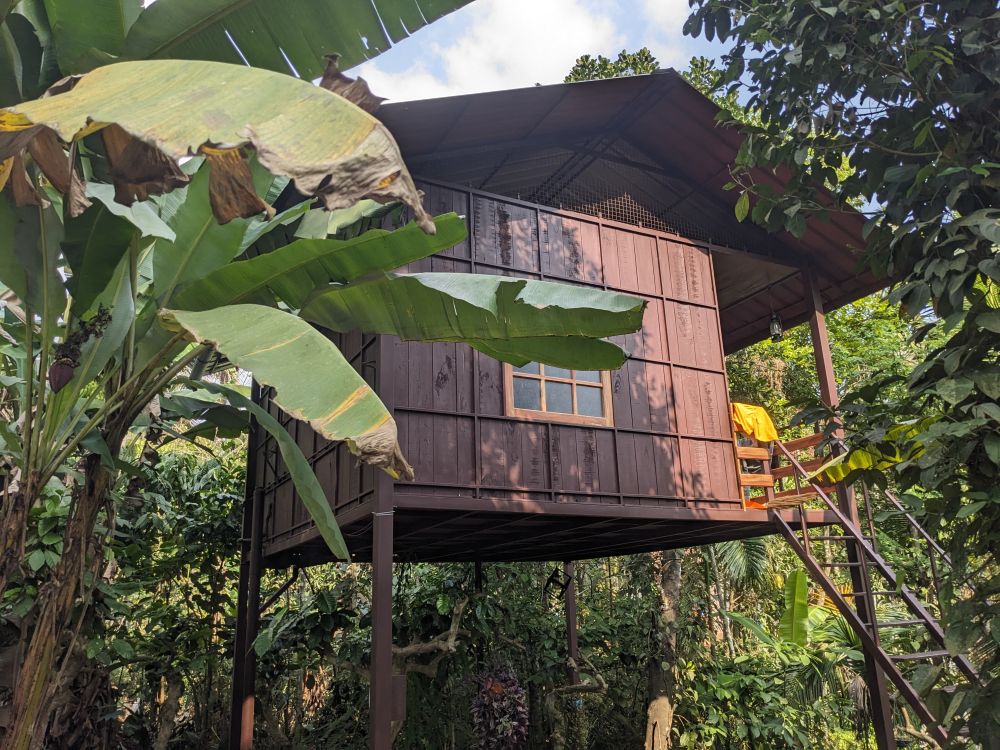
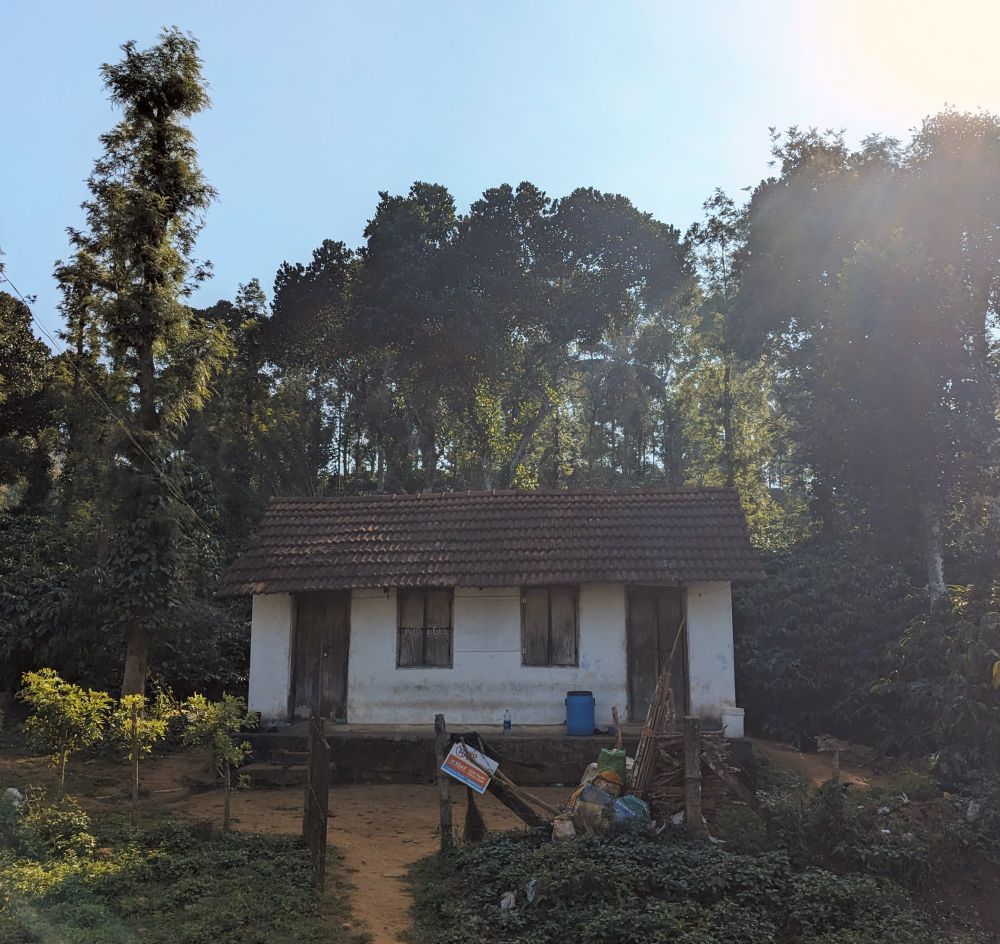
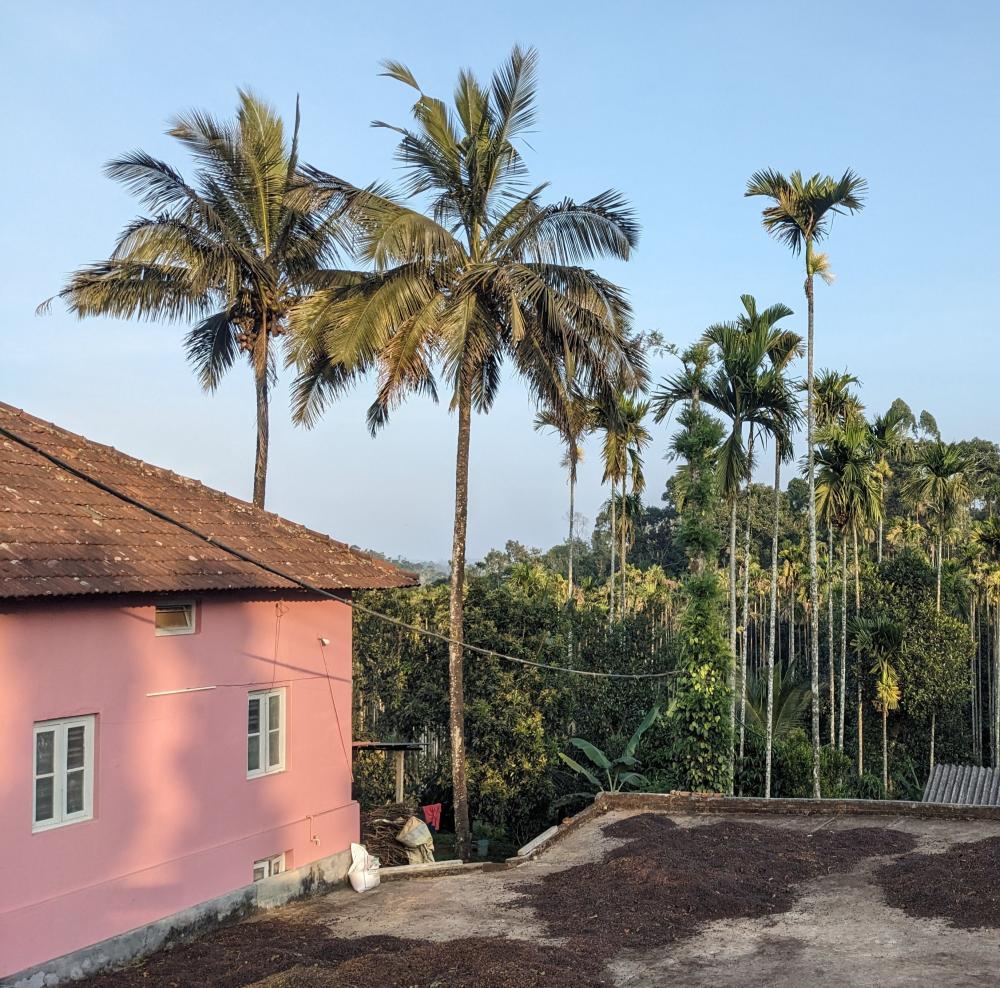
In our house, this house, or I must say, this building, the owner’s family stays upstairs. I guess they have more guest rooms on the second floor. Behind our house, which has two rooms, a hall, a kitchen, two bathrooms, more common area, is the dormitory which is unoccupied at the moment. The coffee and betel nut estate of the family is behind the building. Our porch leads onto the cement driveway which fronts the green estate.
Here downstairs we are, in a quaint village in Wayanad, our doors open to the lushness of this coffee district.
We have spent three nights in this home. Today is our fourth day.
I fell in love with the energy of Pondicherry - the heartbeat of it - even before I could notice what this coastal city offered.
The union territory of Pondicherry (renamed to Puducherry) might be popular for the leftovers from French colonialism: ubiquitous bakeries, wine bars and restaurants, narrow lanes studded with monochrome baroque buildings, and the French-speaking Tamils. Or for being the crucial port it became as early on as in the 3rd century of the iron age people. The ancient ceramic burial urns, wine jars, fish garum amphoras, and the Palaeolithic axe discovered around Pondicherry (Tamil Nadu) and now kept in the city’s museum do impress upon one the history of the town that seemed to have existed since time is known.
We Wanted to Visit Sharavathi Valley Wildlife Sanctuary, But Didn’t Know We Were In It; We Looked For a Big Adventure, But We Were On It Already
That day had started late. We arrived at a homestay near Jog Falls in Sharavathi Valley two days ago. The occasion was of the New Year.
Like always, I had zoomed in and out of Google Maps and found a vast green blotch dotted with blue pools that I hadn’t explored yet. It was Sharavathi Valley. And once again, I overruled my partner who wanted to visit an easy place, such as Gokarna or Hampi. Easy not because of the distance from Bangalore. But he preferred those well-known destinations because the internet didn’t have much information about Sharavathi Valley.
Not that we ever knew more about a place we wanted to visit than how far away it was and where we would put up for the first night. Sometimes, we even booked that first night while on the way or checked out a couple of hotels or home stays upon arrival. But having to navigate a large forested valley without knowing the local language, any information, and the possibility of losing phone signals could intimidate anyone. Though, to me, the journey sounded adventurous, and so my partner gave in, too.
When my partner and I drove to Pondicherry city to stay for a few months, first, we booked a small Airbnb for three days. Though my experience with Airbnb has been poor, we reserved the one-room living and bedroom as no other accommodation on the various booking websites looked good or well-priced. The well-reviewed family guesthouse didn’t have even one poor feedback. Everyone spoke highly of the place and the host family. (You can read more on finding guesthouses in India in the link.)
The house was in the congested neighborhood of Tsunami Quarters-a housing colony made for fishermen whose homes were too near the coast. Tsunami Quarters was occupied after cyclone Thane hit the state of Tamil Nadu and Pondicherry on the east coast of India in 2011.
From Bangalore to Coorg by Car – Rendezvous Through Wild Karnataka
I won’t tell you that Coorg is the Scotland of India, as every other Bangalore to Coorg travel guide must have already said this to you. I have not been to Scotland and don’t know its landscape. But I can say that Coorg, also known as Kodagu, is straight out of that movie in which fat cows graze on a grassy carpet while spinach-green hills pose in the background.
I’m not sure if I can call Coorg a quaint town. Everybody traveling in Karnataka go on a road trip from Bangalore to Coorg, at least once. I’ve been to Coorg so many times I now have a list of 15 stunning and secluded coffee estates, home stays, and hotels in Coorg.
A humble request: We overcrowd Venice, Paris, Coorg, Florence, Bangkok as if there is nowhere else to go. Meanwhile, the ecologies of these places suffer due to overcrowding and lack of care, obvious when tourists throng the destination. Let’s try to distribute ourselves through the lesser visited places which all hold, if not more, the similar richness of people, food, landscape, and history.
May I suggest Stuart hill in Coorg instead of Madikeri town, Mandi district instead of Manali, Kalga instead of Kasol, and Chile instead of London and Paris? Let us promise to respect these new places and not turn them into just hangouts to chill. Let’s chill in our backyards. But when we visit, let’s visit to see, know, and understand something unknown to us.
For more than eight years, I've read and written night and day to make On My Canvas—my sustenance and life's focal point—a place of inspiration, trial, adventure, and happiness. Everything here and my weekly newsletter, Looking Inwards, is free. No AI. No ads. No paywalls. No sponsors. No paycheck.
If my blog has served you in any way, please consider making a one-time or a consistent donation. Your generosity will not only support the idea that we can create a life of our choice but also sustain good-quality free writing online. I'll be thankful forever.