Unseen Bangalore Photos From a Plethora of Day Outings in Bangalore City
These are not your usual Instagram Bangalore pictures.
My motive behind this piece on Bangalore images-which is really nothing but a collection of day outings in Bangalore-is to show real Bangalore. Not the cosmopolitan Bangalore city of the Manyata Tech Park, Cubbon Park, Forum Mall, and Koshy’s that every outsider like me knows. I wish to bring forward the old city, the city dense with flower shops, colorful food, coconut stalls, cycle hawkers, chaotic streets, and ubiquitous hot chips corners. Bangalore would be incomplete if we don’t mention its giant trees jutting out of buildings and breaking out of concrete roads, multicolored Hindu temples with a cornucopia of deity sculptures towering above, the most random stuff being sold in bazaar shops, old-style South Indian dosa joints authentic to their practices even hundred years later, and the feeling of the night during the day when thick Bangalore clouds threaten the residents way more than they would like.
In this essay of Bangalore photos, I share moments that have sparsely studded almost ten years of my life. Starting in 2010, I arrived in and left Bangalore so many times I won’t dare to count my shift outs. Irrespective of how much I wanted to let go of the city, Bangalore (and Karnataka state) didn’t leave me, not so soon.
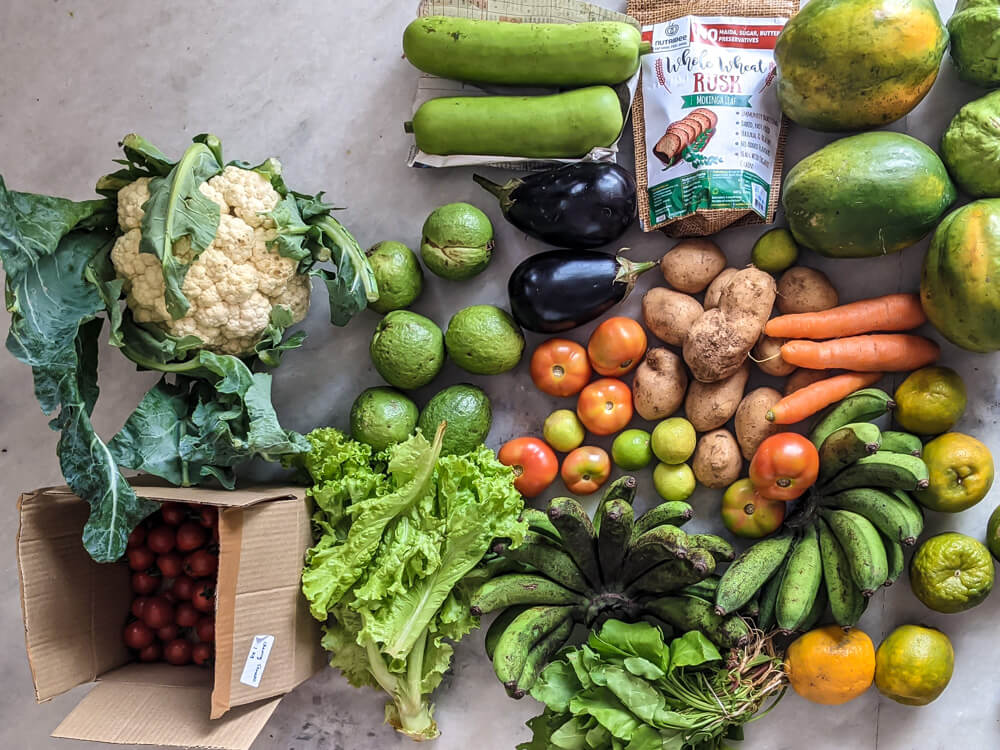
(Phone-Based and) Online Organic Stores in Bangalore That Deliver Fresh, Natural, Preservative-Free, and Personalized Food Items to Your Doorstep
Grocery stores in Bangalore line every street. But we can never tell the origin of the fruits and vegetables there. Is the grocery we buy pesticide-free, or are we eating vegetables swathed in medicine?
I love to cook. And, I love to shop for groceries. I will not survive a cloth retail store, but I will be so lost in a vegetable market you won’t find me for hours, (as you can see me in one of the most colorful markets in Siliguri, West Bengal.)
Something about the fragrant vegetables and their vibrant colors pulls me towards them. My attraction to the farmer’s markets and organic stores in Bengaluru could be attributed to my foodie nature. Food is a blessing in my simple life. I’ve been cooking since I’m a little girl. And I’ve been overeating ever since I opened my eyes.
For the past four to five years, I’ve been focusing on eating healthy food and living a conscious life. I’m being mindful of the source and content of my food. My diet has shifted heavily towards vegetables, fruits, whole grains, juices, nuts, yogurt, and other light food products. I try not to purchase items with liquid glucose, edible color, all-purpose flour, palm or vegetable oil, flavor enhancers, and other such redundant and unhealthy items. You would be surprised to know how little you can purchase if you vehemently avoid these ingredients.
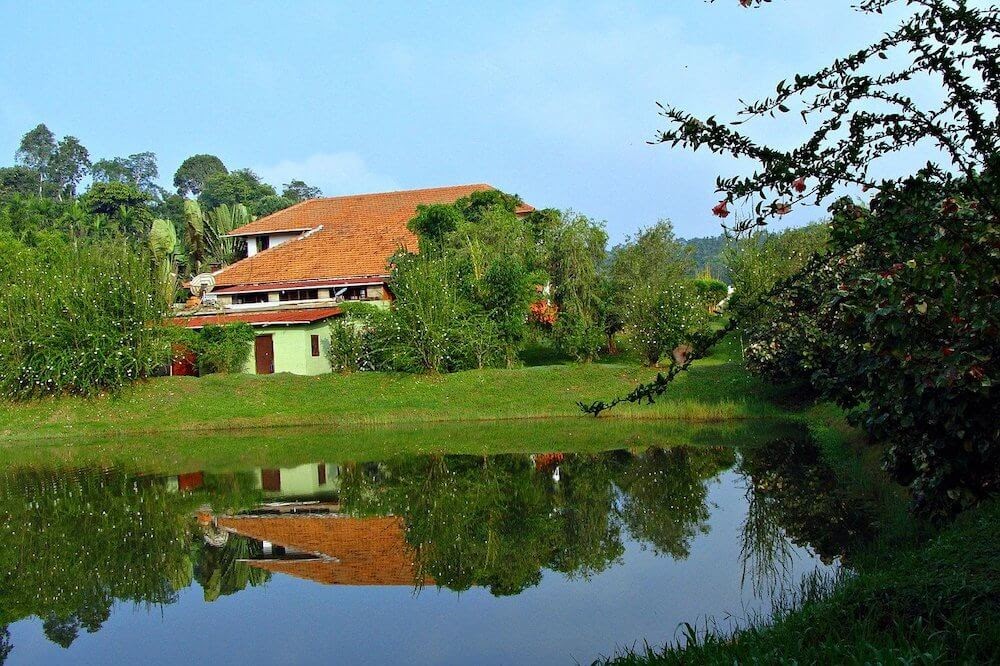
We all have been stuck inside homes for about six months now. Though usually, I am planning a birthday trip around this time of the year, as September approached I got anxious that I might want to go somewhere. Would I be able to step out of Bengaluru or even my house?
Then I remembered the article I had written on traveling in the Pandemic. For those who have read the guide know that I only suggested traveling by car to an isolated homestay or a guesthouse near the woods. Thus you can change your view, hike around, be in nature, and work with the lush forest swaying in front of you.
Remembering my idea, I decided to travel in Karnataka and started searching for isolated hotels in the state. But as I pored over hundreds of hotels and guesthouses over various websites, I decided to dedicate an entire guide to isolated hotels in Madikeri, Coorg as most of the properties I liked were from this area.
Update 2026: Though I wrote this guide in September 2020, these are still some of my most preferred home stays and hotels in Coorg. The only problem is that most places have increased their prices exponentially. Everyone around Bangalore tells me this is the supply-demand model. I say, people are making as much money as they can. They don’t necessarily have to. Please do consider your budget while browsing through the guesthouses.
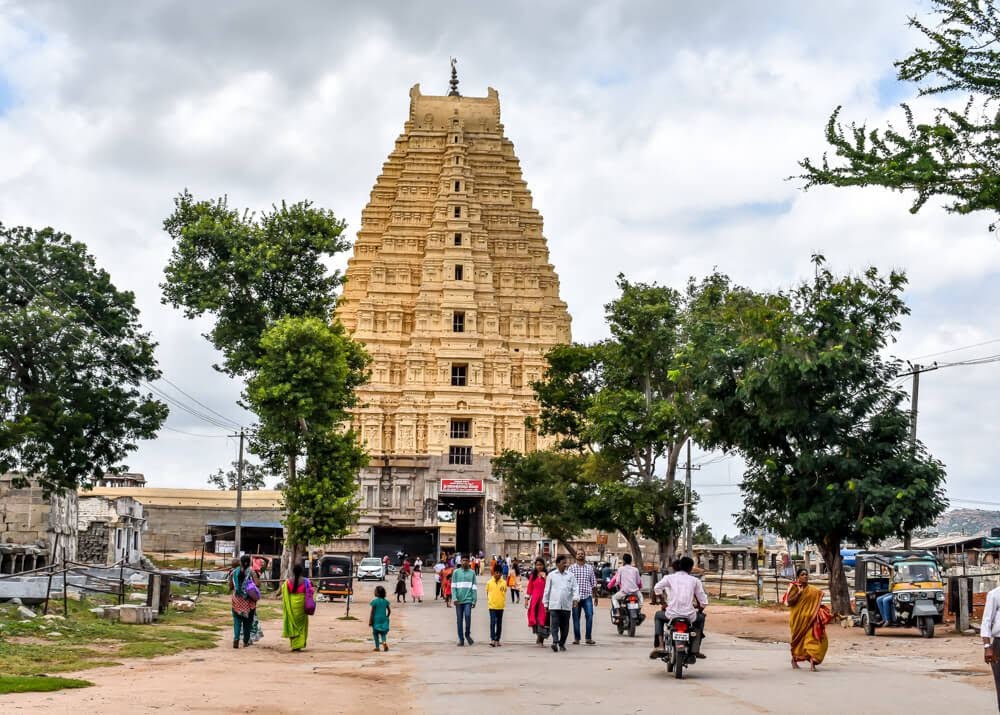
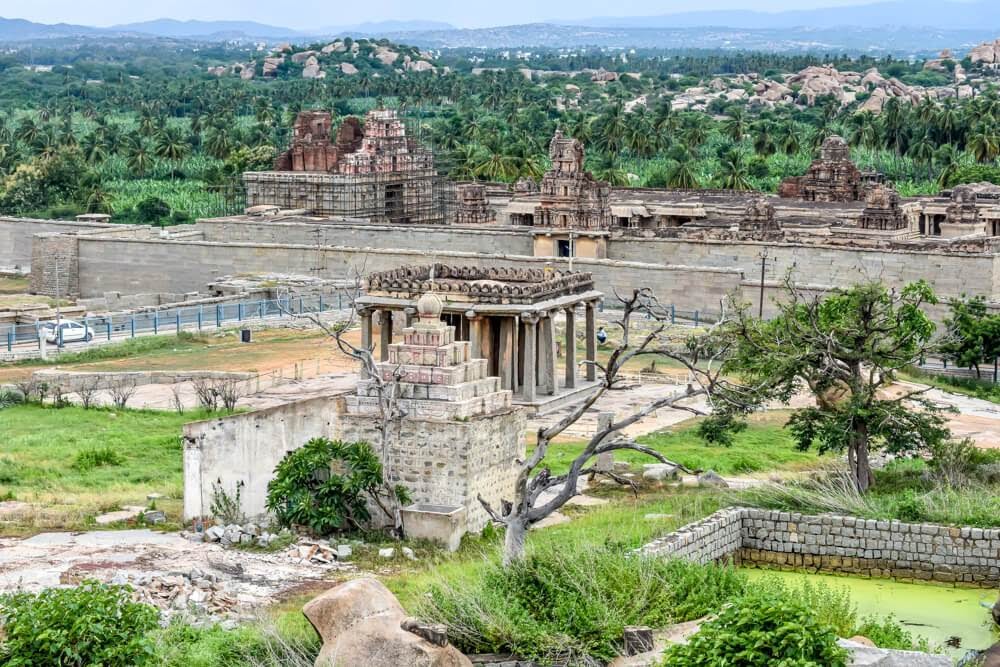
I visited Hampi twice, once in 2014, and then again in 2019. Though I have been to Hampi two times and have spent about ten-eleven days in the area, I am still nothing less than dazed by not just the ruins and temples of Hampi, but by the green Hampi villages, the crispy dosas that have a different flavor in that part of Karnataka India, the variety of animal life that is running around Hampi fearlessly, but now more so in national parks such as Daroji, and how it all just dovetail so perfectly together.
My Bangalore to Hampi road journey was no less than an adventure. In the linked guide you can read all about that Bangalore-Hampi road trip studded with aesthetic windmills. This 7,000 words guide is also almost a Wiki for exploring Hampi monuments, its surrounding villages, experiencing its local life and food, and understanding Hampi’s history.
As I have already written about the logistics of traveling and the history of Hampi in the aforementioned travel guide, allow me to jump right into Hampi pictures. I clicked most of these photos with my Nikon DSLR and Google Pixel. Other photos (mostly old Hampi photos) have been taken from around the internet to contrast between the past and new Hampi. I have also added some ancient photos just to give more context to a temple or a carving or a view in case I didn’t have enough relevant pictures.
I hope you enjoy these Hampi images for I had a lot of fun putting this Hampi photography essay together. Machu Picchu could be one of the world’s wonder, Bali is on everyone’s bucket list, Himachal Spiti’s Valley is a craze amongst travelers, but Hampi stands right there in the line.
From Bangalore to BR Hills – Venturing Into the Hearts of Karnataka Jungles
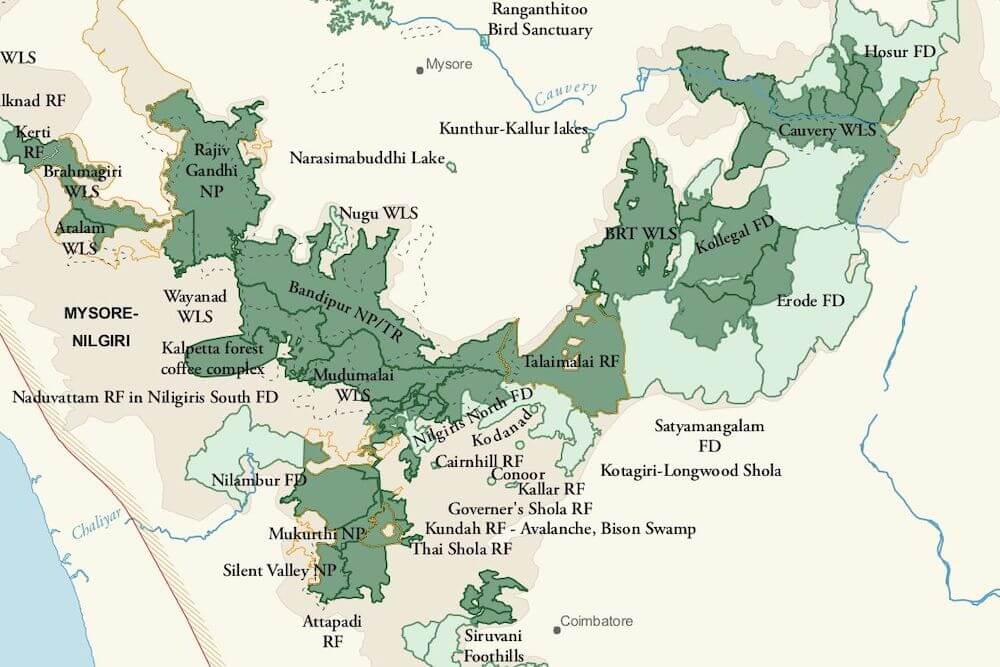
Biligiri Rangana Betta hills or popularly known as BR hills lie about 180 km south of Bengaluru.
Just a 4-5 hours drive away from Bangalore, it is no surprise that the hills make for a perfect weekend getaway. Having been stuck in the city for two months straight, I was in desperate-need-of-greenery-and-fresh-air and quickly finalized upon Biligiri Hills as my weekend destination in Karnataka. The trip was with my husband so it had to be short to accommodate his full-time job. But even a 2-3 days road trip soaked us in so much nature that we savored it through the next few months of the dry pandemic era in which even stepping out of our tiny abode for groceries felt like a luxury.
I hadn’t expected to see much wildlife in BR hills, as my ventures into the hearts of Karnataka jungles (such as the Dandeli Sanctuary) before hadn’t borne me much fruit; I never saw the big cats or even the tail of an errant elephant. But little did I know that my desire to see Karnataka wildlife would finally come to color in the Biligiri Rangana Hills, officially known as the BR Hills Wildlife Sanctuary which was formed in 1974.
At an altitude of 3500 feet above sea level, BR hills stand where the Western Ghats meets the Eastern Ghats, and make for an ecological hotspot. In addition to the location exoticism, the BRT wildlife sanctuary is quite large, 540 km² in the area to be precise, and is also an official tiger reserve.
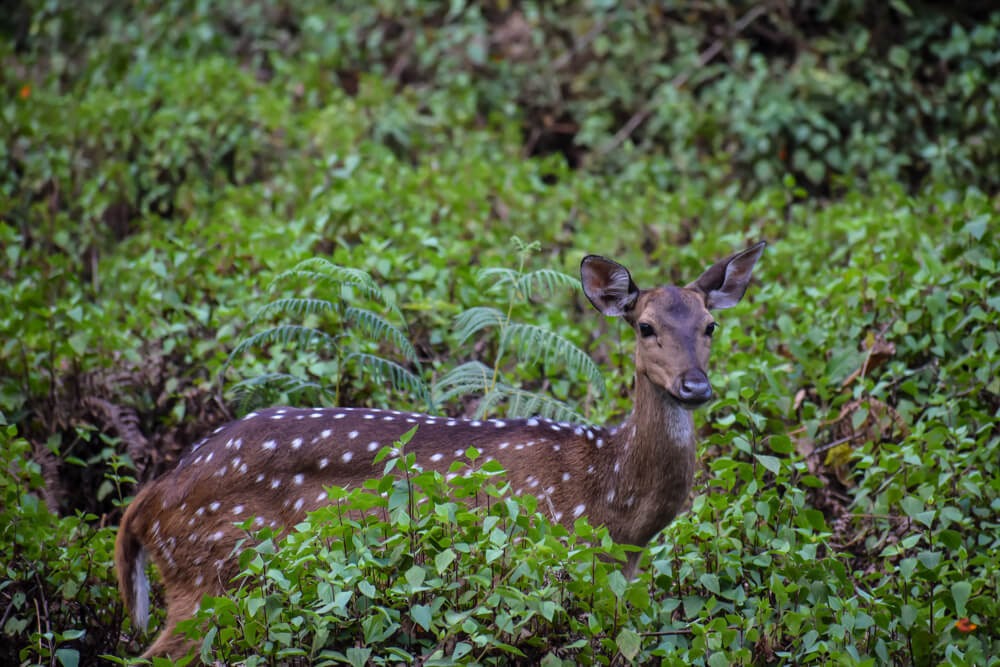
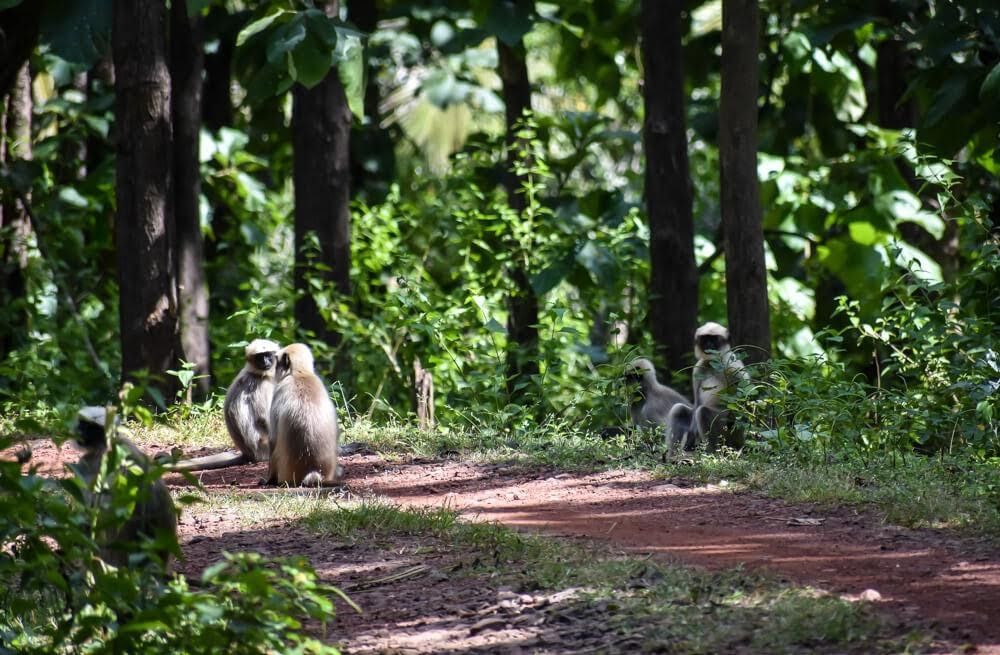
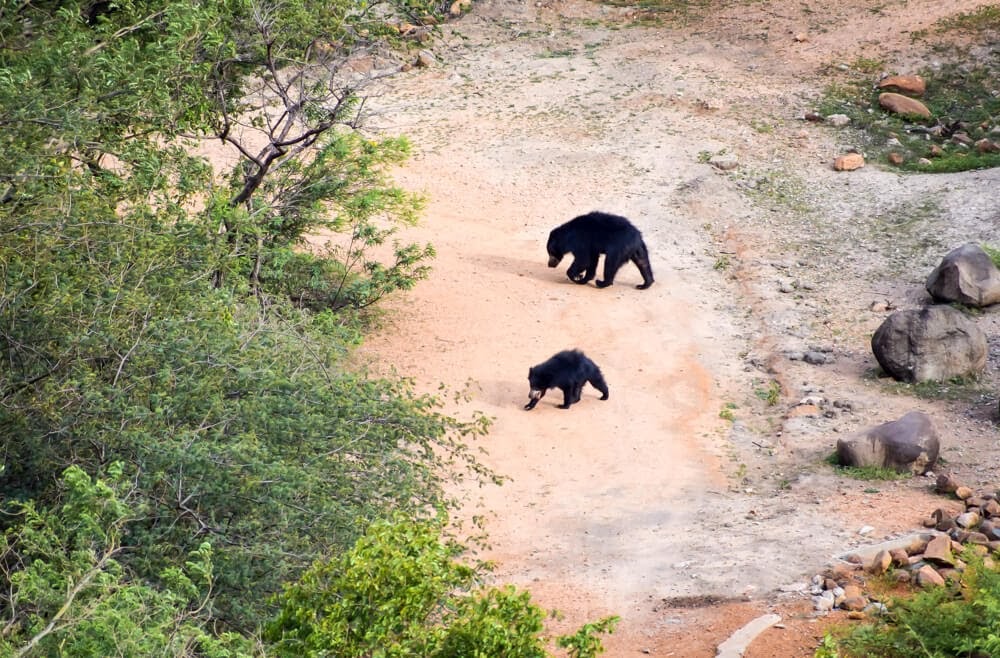
Not only did we see two sloth bears, at different times, sprinting across in front of our jeep, but we also spotted a leopard hidden behind the thickets, wild bisons appearing all macho, mama and baby chital(spotted deers), an Indian grey mongoose tottering around, a tortoise couple resting on a log in a pond, vultures and owls perched on high and dry tree branches, lone sambar deers, barking deers melting us with their innocent eyes, Malabar squirrels nibbling through nuts perpetually, colorful birds of various kinds, langurs, wild monkeys, and wild boar. Phew.
From Bangalore to Shimoga – In search of the Belligundi waterfalls in Sharavathi Valley
The first time I came to Bengaluru in 2010, everyone told me that this tech city is the base to explore the green Karnataka state.
Back then my knowledge about Karnataka was limited to the first page of Google that showed a standard list of destinations in the state: Coorg, Hampi, Chikamagalur, Gokarna, Ooty, Mysore, etc. My batchmates from IIT Delhi who had done their third-year internship in Bengaluru had specifically told me that there are a lot of water bodies and waterfalls near Bangalore. Though the phrase water bodies had sounded strange, I was thrilled to move to Bengaluru.
To know more about the things to do and places to see in Karnataka, I browsed through its pictures online. Mighty tigers, shy leopards, sloth bears, colonial and heritage buildings such as the Bangalore Vidhan Soudha and Mysore palace, lush tea and coffee estates, tall palms and coconuts fringing the highways, sunrises from hills, caves, turquoise beaches, foreigners in groups, women in heavy traditional gold jewelry – the plethora of pictures that came up when I searched about Karnataka gave me an idea about the state.
Frankly, I was still clueless about what I was going to experience here.
My decade-long romance with Karnataka has enriched me both physically and spiritually. Now I have a long list of popular and offbeat places of Karnataka I’ve seen and experienced. But when I discover places like the Belligundi waterfall, I wonder if I would ever be able to say that I have seen enough of Karnataka.
Our Dandeli trip started with a bus ride from Bangalore to Dharwad. Dharwad to Dandeli is about 55 km, and we booked a bus to Dharwad instead of Dandeli for we couldn’t find any direct ac and sleeper bus from Bangalore to Dandeli.
The bus journey was like any other night stay, except the desperation of the travelers for the occasional pee halts. If you ever use the sleeper buses in India, remember that you will sleep well but also remember to pee before you board the bus. And irrespective of how sleepy you are, if the bus stops in between and the conductor shouts that they are stopping for the toilet, drag yourself out of that questionable blanket and make use of the break. You never know when the bus will stop the next time.
Our bus journey was about 10-hour, and when I opened my eyes, we were approaching the Dandeli town. Now, we had to make way to the Dandeli Jungle Camp – one of the best places in Karnataka for nature lovers.
Introduction to Dandeli Wildlife Sanctuary and Kali Adventure Camp
Though just 100 km from Goa, Dandeli is mostly absent from the travel itineraries of Indian and foreign tourists. Whenever I ask my foreign friends about their India tour, they mention Varanasi, Hampi, Goa, Dharamshala, Amritsar, Jaipur, Spiti Valley, Kerala, but never do they speak about Dandeli wildlife sanctuary. Even most of the Indian travelers visiting South India don’t have Dandeli in their list of places to visit in Karnataka.
What is to be seen in Dandeli? What is Kali Adventure Camp?
Dandeli is a city in the Uttara Kannada district of Karnataka, India.
I have spoken in detail about the Dandeli town in my article on Dandeli Jungle Camp where I stayed deep inside the Dandeli forest. But to give you an idea, Dandeli city is located in the Western Ghats, and the entire surrounding area of Dandeli is a forest.
This 1200 square km forest is known as Dandeli Wildlife Sanctuary or Dandeli National park, which is also known to be the second-largest wildlife sanctuary in Karnataka. Kali Tiger Reserve, that was previously known as Anshi National Park or Anshi Tiger Reserve, is part of the Dandeli Sanctuary. The sanctuary is now under the protection of the Karnataka government.
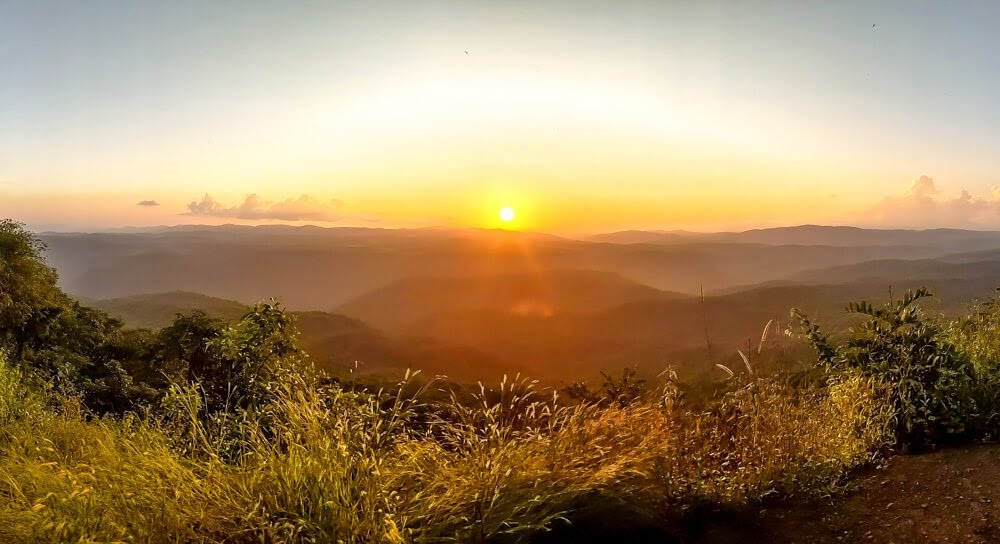
As Dandeli lies in the Western Ghats, you can expect the forest to be dense and hilly. From a high viewpoint in the Dandeli wildlife safari that I took later, I saw how thick the forest was.
The sunlight never reaches some parts of the forest, our guides from the Kali Adventure resort told us. I didn’t doubt them for I saw cauliflower-florets-like trees standing neck to neck fighting for space and air on all the rolling hills of Dandeli sanctuary. From that far, I didn’t see even an inch of empty ground.
Daroji Bear Sanctuary, Hampi, Karnataka – Home of Indian Sloth Bear
I have grown up in a small town in North India where pet cows and chirpy parrots in the balcony are still a thing.
My mother has grown such a lush garden that while growing up I always spent my evenings looking at the garden activity when bulbuls flew home or the tailor birds settled in their chosen tiny branches. A Sunday was less about Popeye or Duck Tales and more about protecting ripe guavas from monkeys who were attracted to our garden from miles. When we got relief from the monkeys we were chasing away squirrels who were adamant to build their nests out of our school socks.
My affinity for animals often sends me to national parks around the world (I found many during my travels in Karnataka.). No prizes on guessing that you can also find me strolling in Indian jungles just to get a glimpse of the local animals.
When I traveled to Hampi this September, I hadn’t even heard of the Daroji Sloth bear sanctuary. But when I got to know that Daroji is just an hour away from Sanapur, my stay in Hampi, I postponed the ruins and other things to see in Hampi to another day and instead we jumped in our car to drive straight away to the Daroji sanctuary.
Everyone travels to Hampi, one of the best places to travel in Karnataka and a UNESCO World Heritage site, to see the ruins of the ancient Vijayanagar empire. They say Vijayanagar was once the richest empire in the world. But I didn’t visit Hampi just to see the ruins. My favorite part about Hampi was the nature that cradles Hampi in her lap as if sympathizing with her for the tragedies the empire suffered.
Also, this was not my first time in Hampi, and I was better informed about the place.
My first trip to Hampi from Bangalore was about a few years ago. Back then I had made a list of places to see in Hampi that included the main Hampi attractions such as the Virupaksha temple, the Vitthala temple, and the other ruins that form the groups of monuments at Hampi. That was a three-day Hampi trip from Bangalore that only left me wanting to see more of this archaeological wonder of the South.
When I traveled to Hampi the second time recently, I didn’t make a Hampi itinerary. Why?
When you Google search about Hampi, you are bound to get overwhelmed by the number of things to do in Hampi. Hampi images filled with historical buildings and unbelievable boulder arrangements amidst a lush spread of fat palm and tall coconuts would not only leave you amazed but bewildered.
From Bangalore to Coorg by Car – Rendezvous Through Wild Karnataka
I won’t tell you that Coorg is the Scotland of India, as every other Bangalore to Coorg travel guide must have already said this to you. I have not been to Scotland and don’t know its landscape. But I can say that Coorg, also known as Kodagu, is straight out of that movie in which fat cows graze on a grassy carpet while spinach-green hills pose in the background.
I’m not sure if I can call Coorg a quaint town. Everybody traveling in Karnataka go on a road trip from Bangalore to Coorg, at least once. I’ve been to Coorg so many times I now have a list of 15 stunning and secluded coffee estates, home stays, and hotels in Coorg.
A humble request: We overcrowd Venice, Paris, Coorg, Florence, Bangkok as if there is nowhere else to go. Meanwhile, the ecologies of these places suffer due to overcrowding and lack of care, obvious when tourists throng the destination. Let’s try to distribute ourselves through the lesser visited places which all hold, if not more, the similar richness of people, food, landscape, and history.
May I suggest Stuart hill in Coorg instead of Madikeri town, Mandi district instead of Manali, Kalga instead of Kasol, and Chile instead of London and Paris? Let us promise to respect these new places and not turn them into just hangouts to chill. Let’s chill in our backyards. But when we visit, let’s visit to see, know, and understand something unknown to us.
As we approached the Ranganathittu National Park, we could see big birds flying above us in groups. That part of the Mysore city felt like a forest. Soon we would see crocodiles basking on rocks and islets full of young chicks chattering incessantly for food.
Ranganathittu Bird Sanctuary is a natural reserve in the Mandya district of Karnataka. The reserve is three kilometers from the historic town of Srirangapatna (another important place in Karnataka) and sixteen kilometers (10 mi) north of Mysore. The drive to Ranganathittu bird sanctuary from Bangalore took us about four hours.
Ranganathittu islets were formed when an embankment across the Kaveri river was built between 1645 and 1648 by the then king of Mysore. These islets, originally numbering twenty five, soon started attracting birds. Once upon a time, ornithologistSalim Ali observed migrant birds nesting in huge numbers on the islands. Upon his suggestion, the King of Mysore declared the islets a protected area in 1940. Now the sanctuary is formed by six of these islets on the Kaveri river.
As soon as we arrived at Ranganathittu, we purchased a ticket and went inside. As we went inside the sanctuary, we could see the Kaveri islands below us, and above us in the sky flew painted storks, ibis, pelicans, and herons. At least those were the birds I could identify. When we took the special boat ride that takes in seven people and goes around the sanctuary for forty minutes the boatman told us that the Ranganathittu reserve hosts at least one hundred seventy bird species. Some of the common birds found are painted storks, Asian openbill storks, woolly-necked stork, pelicans, river terns, egrets, cormorants, herons, and varieties of kingfishers.
The best time to visit Ranganathittu Bird Sanctuary is from December to February, and we were well within the time frame. During these months migrant birds come to Ranganathittu from as far as Siberia, South America, and the Himalayas, and they all nest in the bird sanctuary. You can also spot crocodiles, otters, mongooses, and flying foxes there. Just keep your eyes open and binoculars in focus.
I penned down my experience in Ranganathittu National Park in a poem. After all, what is better than nature and poetry?
Writing down that poem here. Hope you enjoy it 🙂
Painted storks in Ranganathittu
As we entered the sanctuary, painted storks glided above us in the clouded sky,
and with our heads tilted towards the heavens,
we walked by the side of the muddy Kaveri,
to see flocks and flocks of white and grey birds just perched onto the canopies of the Arjuna and the Acacia on the islets.
The crisp air buzzed with their songs and shrieks,
though I couldn’t identify even one of those notes.
We gazed at the distant foliage to recognize the winged-ones,
but our eyes instead discovered three crocodiles who rested on the rocks with their powerful jaws wide open,
as if they were waiting for a fish to dive into their mouth.
Their stillness made us wonder if they were real or fake,
and then we saw one of them gracefully gliding into the coolness of the water,
For more than eight years, I've read and written night and day to make On My Canvas—my sustenance and life's focal point—a place of inspiration, trial, adventure, and happiness. Everything here and my weekly newsletter, Looking Inwards, is free. No AI. No ads. No paywalls. No sponsors. No paycheck.
If my blog has served you in any way, please consider making a one-time or a consistent donation. Your generosity will not only support the idea that we can create a life of our choice but also sustain good-quality free writing online. I'll be thankful forever.